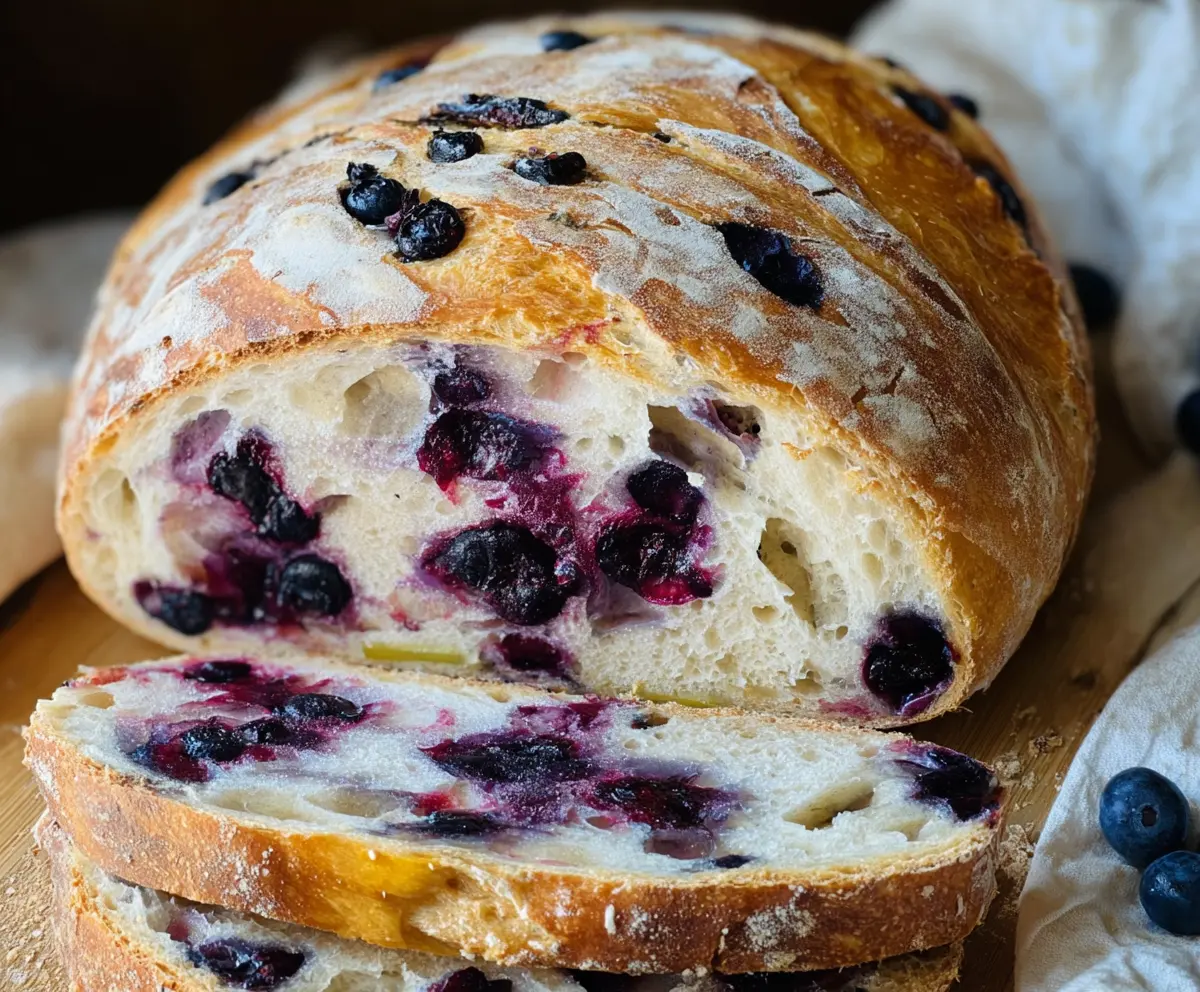
Lemon Blueberry Sourdough Bread is a bright and tangy twist on classic sourdough, filled with fresh blueberries and a gentle zing of lemon. The crusty exterior gives way to a soft, slightly chewy crumb bursting with juicy fruit and citrus notes that make every bite exciting. This bread is a perfect mix of sweet and tart, with a slight tang from the sourdough that adds depth and character.
I love how the lemon zest brings just the right amount of freshness to balance the natural sweetness of the blueberries. When the berries burst while baking, they create these little pockets of gooey goodness that make the bread feel both rustic and special. I like to slice it thick and toast it lightly so the flavors really come alive, especially when spread with a little butter or cream cheese.
This bread is my go-to when I want something different for breakfast or a snack. It’s fun to share because it’s unexpected—people often ask for the recipe after tasting it! Baking it fills the kitchen with a lovely fruity aroma, and it’s such a treat to enjoy a slice with a cup of tea or coffee. I find that the lemon and blueberry combo makes sourdough feel fresh and new every time.
Key Ingredients & Substitutions
Bread Flour: Using bread flour helps build a strong gluten structure for a chewy, airy crumb. If you don’t have bread flour, all-purpose flour works, but the bread may be a bit softer.
Blueberries: Fresh blueberries add juicy bursts and vibrant color. Frozen blueberries can be used but add them straight from frozen and gently fold to avoid too much juice in the dough.
Lemon Zest & Juice: Lemon zest brings a fresh citrus aroma that pairs perfectly with the blueberries. Fresh lemon zest is best for flavor; bottled lemon juice can substitute in a pinch, but avoid altering the dough’s hydration too much.
Sourdough Starter: Your active starter adds natural tang and leavening. Make sure it’s bubbly and lively for best rise. If you don’t have a sourdough starter, try using commercial yeast but expect a different flavor and timing.
How Do I Fold in Blueberries Without Crushing Them?
Adding blueberries without breaking them apart is key to keep pretty pockets of fruit in the bread instead of purple streaks.
- Start folding when the dough is just mixed, not fully tight yet.
- Use a wide rubber spatula or wet hands to gently lift and fold the dough over itself, catching blueberries carefully.
- Add blueberries gradually in two batches if needed, folding each time to distribute evenly.
- Avoid overmixing as it crushes the delicate berries and makes the dough too wet.
This gentle folding keeps blueberries mostly intact, giving you lovely fruit bits in every slice.
What’s the Best Way to Get a Crispy Crust on the Sourdough?
Crispy crust is what makes sourdough bread extra special. Here’s how I do it:
- Preheat your oven with a Dutch oven or baking stone inside to get it very hot before baking.
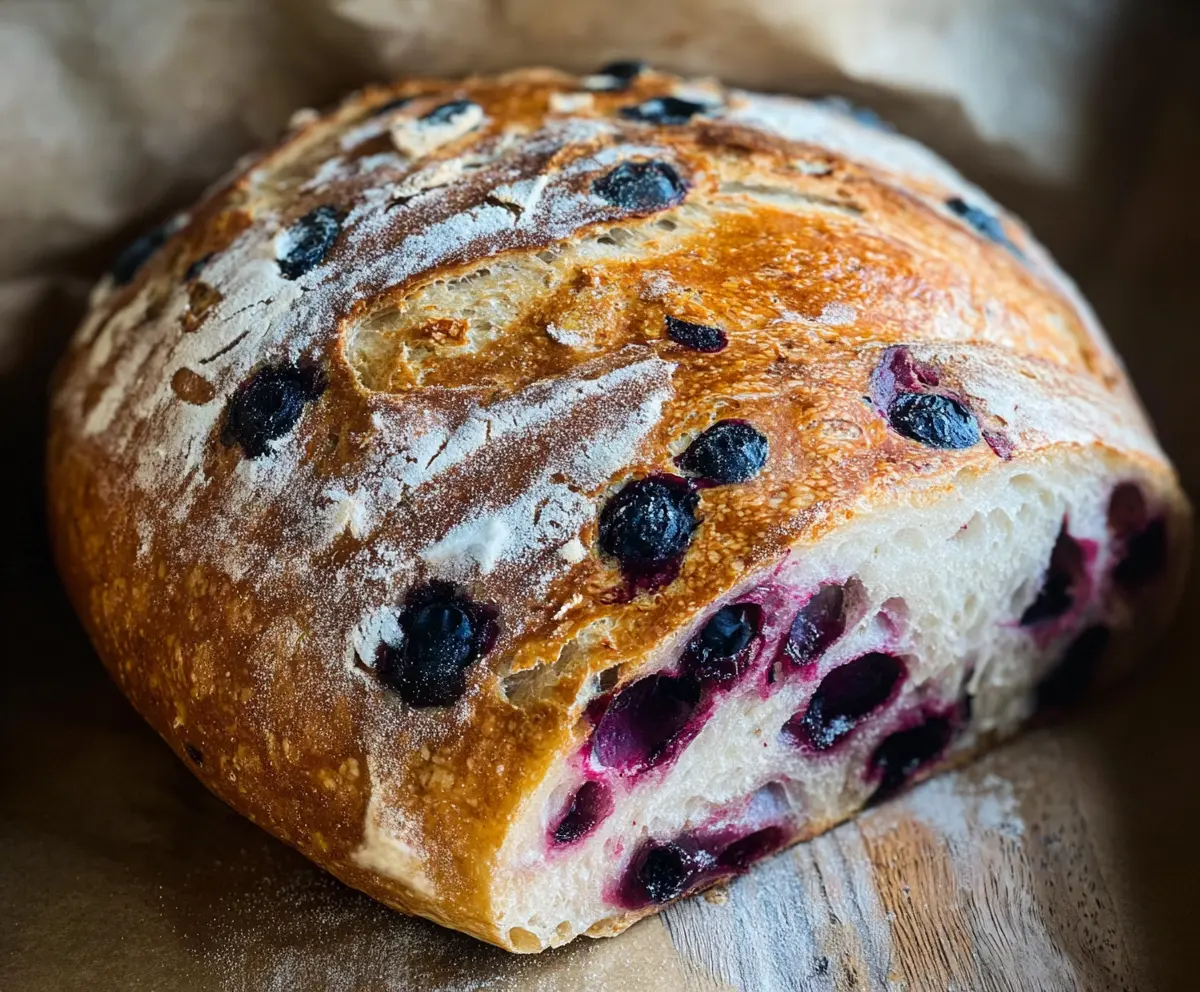
- Use a covered Dutch oven or place a bowl over the loaf for the first 20 minutes to trap steam, which helps crust develop and expands the loaf.
- Remove the cover halfway through baking to let the crust crisp up and turn golden brown.
- Let the loaf cool completely on a wire rack before slicing to set the crumb and keep the crust crisp.
This method always gives me a crunchy, golden crust every time.
Equipment You’ll Need
- Large mixing bowl – I like it because it gives plenty of space for mixing and folding the dough.
- Dutch oven or baking stone – creates a hot, steamy environment that helps develop a crispy crust.
- Bench scraper or spatula – useful for handling sticky dough and shaping the loaf.
- Kitchen towel or plastic wrap – covers the dough during fermentation and refrigeration.
- Sharp knife or lame – needed for scoring the dough before baking to control how it expands.
Flavor Variations & Add-Ins
- Use raspberries or blackberries instead of blueberries for a different berry flavor.
- Add a teaspoon of vanilla or cinnamon to give the bread a warm, sweet aroma.
- Mix in chopped nuts, like walnuts or almonds, for extra crunch and texture.
- Swirl in some honey or maple syrup into the dough before baking for added sweetness.
How to Make Lemon Blueberry Sourdough Bread?
Ingredients You’ll Need:
- 500g bread flour (about 4 cups)
- 350g water (about 1 1/2 cups), lukewarm
- 100g active sourdough starter (fed and bubbly)
- 10g salt (about 2 tsp)
- Zest of 1 large lemon
- 150g fresh blueberries (about 1 cup), washed and dried
- 1 tbsp lemon juice (optional, for extra brightness)
- Extra flour for dusting
How Much Time Will You Need?
This bread needs about 30-45 minutes for initial mixing and resting, 4-6 hours for fermentation with some stretch and folds, an 8-12 hour overnight chill in the fridge, and about 40-45 minutes for baking. Plan for a total of about 14-16 hours, mostly hands-off time, perfect for making ahead!
Step-by-Step Instructions:
1. Mix and Rest the Dough:
In a large bowl, combine the bread flour and lukewarm water. Stir until all the flour is moistened and there are no dry spots. Cover the bowl with a cloth and let it rest for 30-45 minutes. This helps the flour absorb water and loosen the dough.
2. Add Starter, Salt, and Lemon Flavors:
After the rest, add your active sourdough starter, salt, lemon zest, and lemon juice (if using) to the dough. Mix everything well until it’s combined. The dough will feel sticky—this is normal. You can use wet hands or a dough hook for easier mixing.
3. Fold in the Blueberries:
Carefully fold in the blueberries so they spread evenly but don’t get crushed. Use a gentle folding motion, lifting and folding the dough over the fruit. This keeps the berries mostly intact and helps prevent too much juice from coloring the dough.
4. Ferment with Stretch and Folds:
Cover the dough and let it ferment at room temperature for 4 to 6 hours. For the first 2 hours, every 30 minutes, perform stretch and folds: pull one side of the dough and fold it over the center, then rotate your bowl and repeat four times. This develops the dough’s structure and strength.
5. Shape and Chill Overnight:
Once the dough has fermented, shape it into a tight round or oval loaf. Place it seam side up into a floured proofing basket or a bowl lined with a floured towel. Cover and refrigerate overnight for 8-12 hours. This slow chill improves flavor and makes the dough easier to handle.
6. Bake Your Bread:
The next day, preheat your oven to 230°C (450°F) with a Dutch oven or baking stone inside to get it very hot. Carefully remove the dough from the fridge, flip it onto parchment paper, and score the top with a sharp knife to help it expand while baking.
Place the dough with the parchment paper into the hot Dutch oven or onto the stone. Cover it with a lid or a bowl to trap steam and bake for 20 minutes. Then remove the cover and bake for 20-25 more minutes until the crust is golden and crisp.
7. Cool and Enjoy:
Take the bread out of the oven and let it cool completely on a wire rack before slicing. This step lets the crumb set and keeps the crust nice and crunchy. Enjoy your fresh Lemon Blueberry Sourdough Bread with butter, cream cheese, or just as it is!
Can I Use Frozen Blueberries Instead of Fresh?
Yes, you can! Just add them directly from frozen to the dough and fold gently. Keep in mind frozen berries may release more juice, so handle the dough carefully to avoid it becoming too wet.
How Should I Store Leftover Bread?
Store leftover bread in a paper bag or loosely wrapped in a clean kitchen towel at room temperature for up to 2 days to preserve crustiness. For longer storage, slice and freeze in an airtight container; toast slices directly from frozen when ready to eat.
Can I Skip the Refrigeration Step?
While you can bake the bread right after bulk fermentation, the overnight chill enhances flavor, texture, and makes the dough easier to shape. If short on time, just skip the fridge but expect slightly less complex flavor.
What’s the Best Way to Score the Dough?
Use a sharp knife or a bread lame to make quick, confident slashes about ¼ inch deep. Scoring helps control how the loaf expands in the oven and creates an attractive pattern on top.