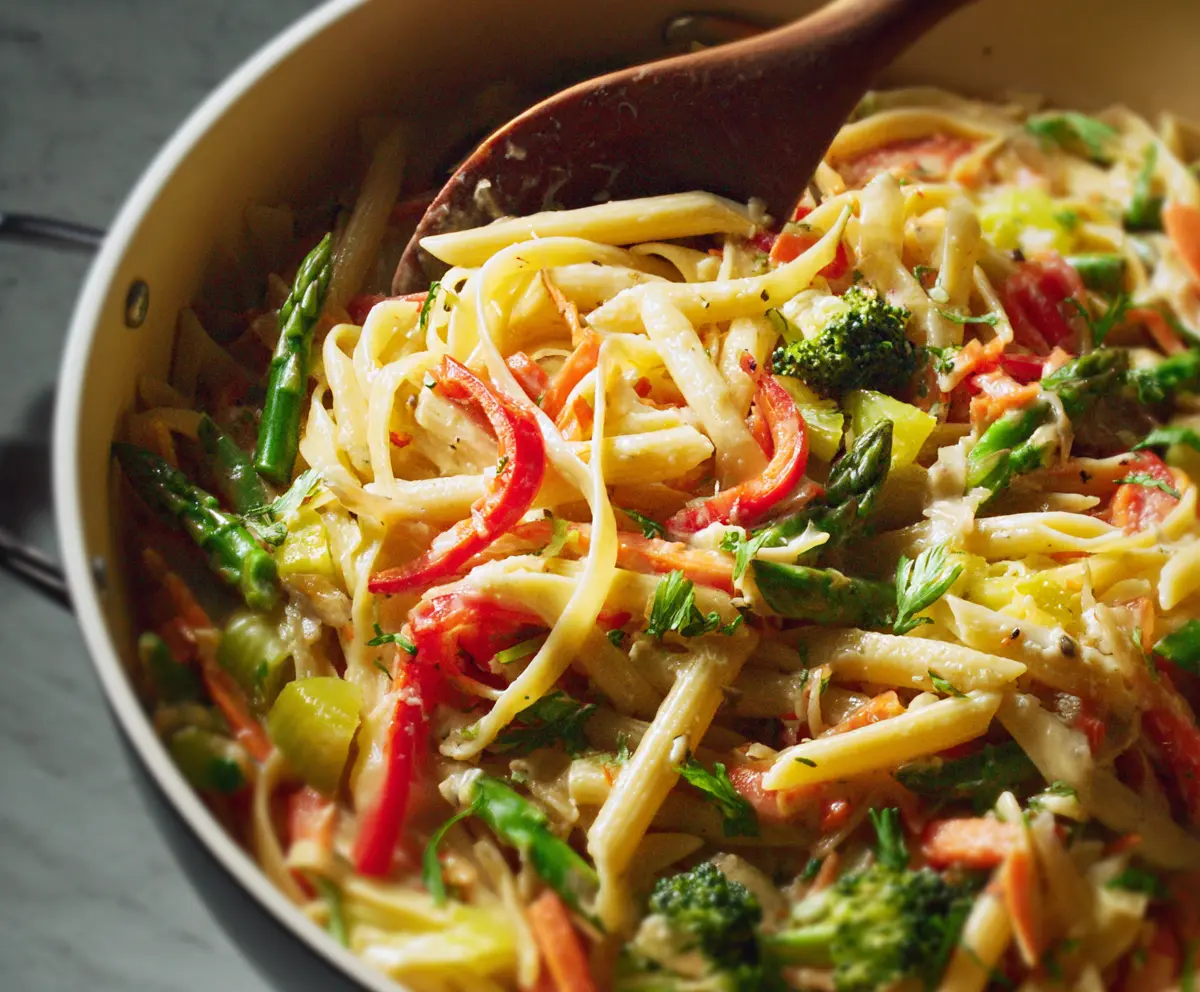
Pasta Primavera is a bright and cheerful dish packed with fresh vegetables and tender pasta. It usually features a mix of crunchy veggies like bell peppers, peas, zucchini, and cherry tomatoes tossed with spaghetti or penne, all lightly coated in olive oil, garlic, and a sprinkle of Parmesan cheese. It’s the kind of meal that feels fresh and light but still satisfying enough for dinner.
I love making Pasta Primavera in the spring and summer when the market is bursting with colorful produce. It’s one of those dishes where you can throw in whatever vegetables you have on hand, making it super flexible and easy to customize. I usually add a little lemon zest or fresh basil at the end—it just brightens everything up and makes the flavors pop.
One of my favorite ways to serve this pasta is with a crusty piece of bread on the side and a simple green salad. It’s perfect for a casual dinner with friends or a quick weeknight meal when you want something healthy but tasty without spending hours in the kitchen. Plus, it always brings a little bit of sunshine to the table no matter the season.
Key Ingredients & Substitutions
Pasta: Fettuccine or penne works great here. Fettuccine gives a nice wide surface for the sauce, while penne holds the veggies well. If gluten-free is needed, rice or chickpea pasta are good options.
Vegetables: Broccoli, asparagus, bell peppers, carrots, and celery add crunch and color. Feel free to swap in zucchini, peas, or green beans depending on what’s fresh or your favorites.
Olive Oil & Garlic: These build the sauce’s base. Use good quality olive oil for the best flavor. You can replace garlic with garlic powder if short on fresh.
Parmesan Cheese: Parmesan adds saltiness and creaminess. Nutritional yeast works well for a dairy-free version, or use a vegan cheese alternative.
Heavy Cream (optional): For a lighter take, skip the cream and use reserved pasta water to create a silky sauce. For dairy-free creaminess, try coconut cream or a cashew-based sauce.
How Can You Keep Your Vegetables Crisp-Tender and Colorful?
Cooking vegetables just right gives Pasta Primavera its fresh crunch and vibrant look. Here’s how to get it perfect every time:
- Start by heating olive oil over medium heat and sauté garlic briefly—just enough to bring out aroma, not brown it.
- Add firmer veggies like broccoli, carrots, and celery first since they take longer to cook.
- Cook for 4–5 minutes, stirring gently, so veggies soften but keep some bite.
- Add softer or quick-cooking veggies (like asparagus or bell peppers) later if you want them brighter and less soft.
- If adding cream, stir it in now, letting heat gently soften the mixture but avoid boiling, which can separate the sauce.
This method preserves color, texture, and natural taste. Remember, vegetables keep cooking a bit even after removing from heat, so it’s okay if they’re just a bit firmer than you want straight from the pan.
Equipment You’ll Need
- Large pot – I use this to boil the pasta easily and get it cooked to al dente.
- Huge skillet or sauté pan – perfect for cooking the vegetables and tossing everything together.
- Colander – helps drain the pasta without losing any of the water.
- Wooden spoon or tongs – makes stirring the vegetables and pasta simple and gentle.
- Measuring cups and spoons – for the cheese, cream, and oil, keeping everything balanced.
- Grater – to grate fresh Parmesan easily and add just the right amount on top.
Flavor Variations & Add-Ins
- Swap traditional Parmesan for vegan cheese or nutritional yeast for a dairy-free twist.
- Mix in cooked chicken, shrimp, or sausage to add protein and make it more filling.
- Use different herbs like basil, thyme, or oregano instead of parsley for varied flavor.
- Add a squeeze of lemon or some lemon zest at the end for extra brightness and freshness.
How to Make Pasta Primavera?
Ingredients You’ll Need:
- 8 oz fettuccine and/or penne pasta
- 2 tbsp olive oil
- 3 cloves garlic, minced
- 1 small red bell pepper, thinly sliced
- 1 cup broccoli florets
- 1 cup asparagus, trimmed and cut into 2-inch pieces
- 1 small carrot, julienned or thinly sliced
- ½ cup celery, chopped
- ½ cup cherry tomatoes, halved (optional)
- ¼ cup fresh parsley, chopped
- ½ cup grated Parmesan cheese
- ½ cup heavy cream or half-and-half (optional, for creamier sauce)
- Salt and freshly ground black pepper, to taste
- Red pepper flakes (optional, for a little heat)
- Lemon zest (optional, for brightness)
- Water or vegetable broth, as needed
How Much Time Will You Need?
This recipe takes about 20 minutes from start to finish. You’ll spend around 10 minutes preparing and cooking the pasta and another 10 minutes sautéing the vegetables and mixing everything together. It’s a quick and fresh meal perfect for weeknights!
Step-by-Step Instructions:
1. Cook the Pasta:
Fill a large pot with water, add some salt, and bring it to a boil. Add your pasta and cook according to the package instructions until it’s just tender (al dente). Once cooked, drain the pasta but save about half a cup of the cooking water — this helps keep the dish moist later.
2. Sauté the Vegetables:
While the pasta cooks, heat 2 tablespoons of olive oil over medium heat in a large skillet or sauté pan. Add the minced garlic and cook for about a minute until it’s fragrant, but don’t let it brown. Then add the broccoli, asparagus, carrot, celery, and red bell pepper. Cook the veggies for about 4 to 5 minutes, just until they’re tender but still have a bit of crunch.
3. Combine Pasta and Vegetables:
If you like a creamier dish, stir in the heavy cream now. Then add the drained pasta to the veggies. Toss everything together, adding a bit of the reserved pasta water if the mixture looks dry. Stir in the grated Parmesan cheese so it melts and gently coats the pasta and veggies.
4. Finish and Serve:
Season the pasta with salt, freshly ground black pepper, and a pinch of red pepper flakes if you want a little heat. Add a sprinkle of lemon zest and fresh parsley for a burst of fresh flavor. Give everything a final toss and serve it warm. For extra yum, top with more Parmesan and parsley.
Can I Use Gluten-Free Pasta for Pasta Primavera?
Absolutely! Just swap regular pasta for your favorite gluten-free variety. Cook it according to package instructions, as cooking times may differ slightly.
Can I Prepare Pasta Primavera Ahead of Time?
You can prep the vegetables and cook the pasta in advance, storing them separately in the fridge for up to 2 days. Combine and reheat gently on the stove when ready to serve.
How Should I Store Leftovers?
Store any leftovers in an airtight container in the fridge for up to 3 days. Reheat on the stove over low heat, adding a splash of water or broth if the pasta seems dry.
What Can I Substitute for Heavy Cream?
If you want a lighter or dairy-free option, skip the cream and use reserved pasta water or a splash of vegetable broth for moisture. You can also try coconut cream or cashew cream as a creamy alternative.