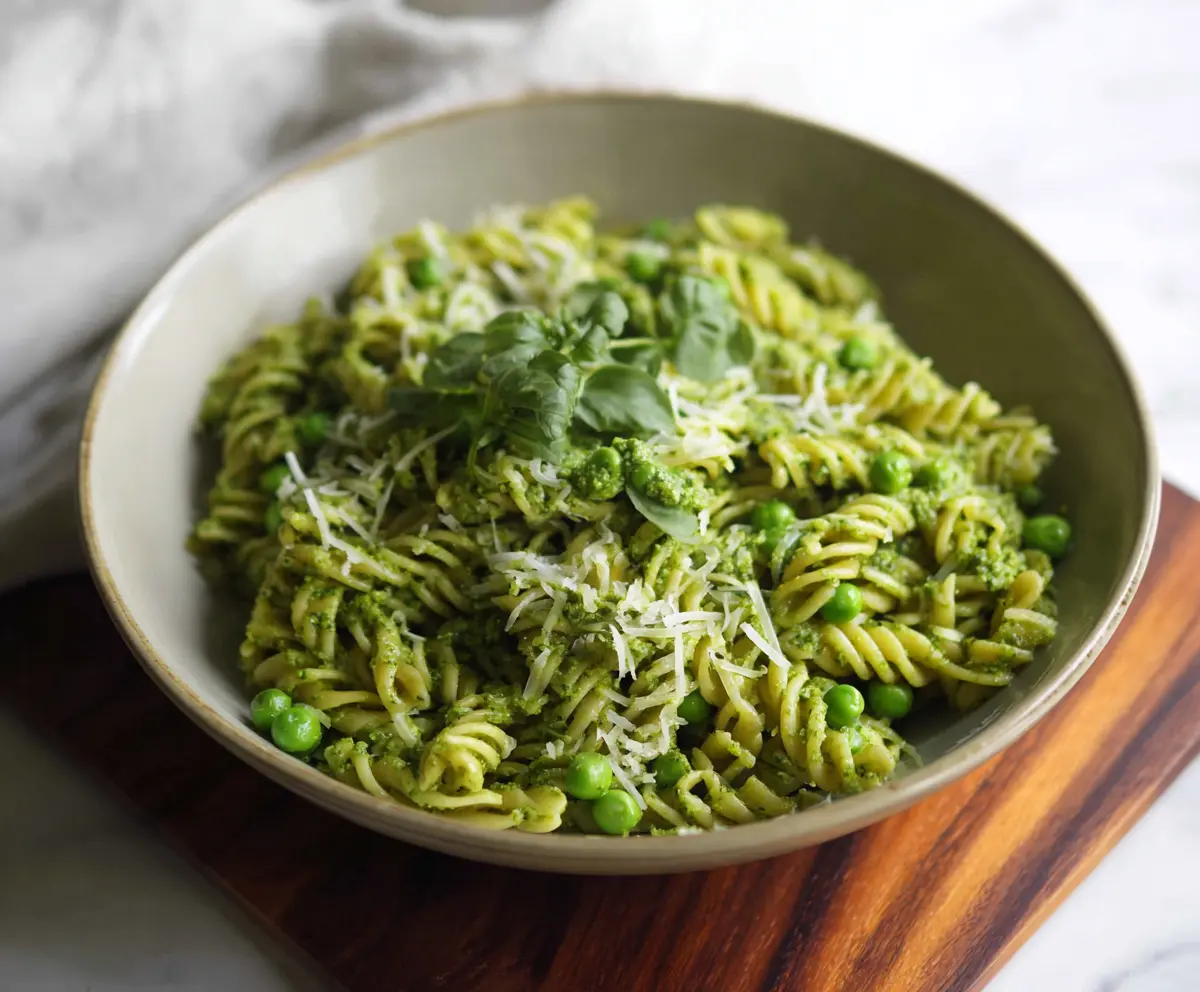
Spring Pea Pesto Pasta is a bright and fresh pasta dish that celebrates the sweet flavors of early spring. The pesto, made with tender spring peas, fresh basil, garlic, and a touch of Parmesan cheese, brings a lovely green color and a light, flavorful zing. Tossed with your favorite pasta, it’s simple yet full of life and perfect for a quick meal that feels like a little celebration of the season.
I love making this dish when spring is just starting because it’s a fun way to enjoy peas beyond the usual side dish. The pesto is so easy to whip up in a blender or food processor, and I sometimes add a squeeze of lemon juice to brighten it even more. I find that fresh peas give the pesto a natural sweetness that’s just irresistible, and it’s a nice change from the classic basil versions we all know.
My favorite way to serve Spring Pea Pesto Pasta is with a sprinkle of extra Parmesan and a handful of toasted pine nuts on top for a bit of crunch. It’s great warm or at room temperature, making it perfect for a casual dinner or even a picnic. This pasta always gets compliments because it’s fresh, light, and satisfying, plus it’s a great way to enjoy the best of spring’s flavors all on one plate.
Key Ingredients & Substitutions
Peas: Fresh peas bring a natural sweetness and bright green color. Frozen peas work well too and are easier to find year-round. Just thaw or blanch quickly to keep their vibrant flavor.
Basil: Fresh basil is a must for that classic pesto flavor. If you don’t have basil, try fresh parsley or spinach, but the taste will be milder.
Parmesan Cheese: Adds a salty, nutty note. For dairy-free, substitute nutritional yeast or a vegan Parmesan alternative.
Nuts: Pine nuts give the traditional creaminess and flavor. Toast walnuts or almonds if pine nuts aren’t available—they add a lovely earthy taste.
Lemon Juice: A little lemon brightens the pesto and balances richness. Fresh lemon juice is best, but bottled works in a pinch.
How Do You Make the Pesto Smooth and Well-Blended?
To get a creamy, smooth pesto, add the olive oil slowly while blending. Here’s how:
- Start by pulsing peas, basil, cheese, nuts, and garlic to break them up.
- With the blender or processor running, drizzle in olive oil bit by bit.
- Scrape down the sides if needed to keep everything mixing evenly.
- Add pasta water a little at a time when tossing with pasta to loosen the sauce.
Patience is key! Slow dripping the oil prevents the sauce from separating and helps everything come together perfectly creamy and smooth.
Equipment You’ll Need
- Large pot – I like it because it’s easy to cook the pasta in a lot of water so it cooks evenly.
- Blender or food processor – makes blending the pesto quick and smooth, saving time and effort.
- Measuring cups and spoons – keep things accurate without extra fuss.
- Slotted spoon – helps you transfer peas or pasta without excess water.
- Large mixing bowl – perfect for tossing the pasta with the pesto easily.
Flavor Variations & Add-Ins
- Use walnuts or almonds instead of pine nuts for a different nutty flavor, especially if pine nuts aren’t available.
- Add cooked shrimp or grilled chicken for extra protein and substance.
- Stir in some toasted sun-dried tomatoes or chopped roasted red peppers for extra sweetness and color.
- Swap basil for fresh spinach or arugula to switch up the flavor and add more greens.
How to Make Spring Pea Pesto Pasta
Ingredients You’ll Need:
Pasta & Pesto:
- 12 oz (340 g) rotini or fusilli pasta
- 2 cups fresh or frozen peas (reserve a small handful for garnish)
- 1 cup fresh basil leaves
- 1/3 cup grated Parmesan cheese, plus extra for serving
- 1/4 cup pine nuts or walnuts (toasted)
- 2 cloves garlic
- 1/2 cup olive oil, plus more if needed
- 1 tablespoon lemon juice (freshly squeezed)
- Salt and pepper to taste
- Fresh basil leaves for garnish
How Much Time Will You Need?
This recipe takes about 20 minutes total. You’ll spend 10-12 minutes cooking the pasta, a few minutes preparing the pesto, and then just a couple more minutes mixing everything together. It’s quick and super fresh!
Step-by-Step Instructions:
1. Cook the Pasta:
Bring a large pot of salted water to a boil. Add the pasta and cook according to the package instructions until it’s al dente (a little firm to the bite). Before draining, save about ½ cup of the cooking water. Drain the pasta and set it aside.
2. Prepare the Peas:
If using fresh peas, blanch them by boiling for 1–2 minutes, then drain and rinse with cold water to stop the cooking. If frozen, simply thaw by placing them briefly in hot water, then drain. Set aside a small handful of peas for garnish.
3. Make the Pesto:
In a food processor or blender, put the peas (except the small handful you saved), basil leaves, Parmesan cheese, toasted pine nuts or walnuts, and garlic. Pulse a few times to start breaking down the ingredients.
While blending, slowly drizzle in the olive oil until the pesto becomes smooth and creamy. Add the lemon juice, then season with salt and pepper to your taste. If the pesto seems very thick, you can add a touch more olive oil or reserved pasta water to loosen it up.
4. Combine Pasta & Pesto:
In a large bowl, gently toss the cooked pasta with the pea pesto. Add the reserved pasta water a little bit at a time, until the sauce coats the pasta nicely and looks creamy. Stir in the reserved whole peas.
5. Serve and Enjoy:
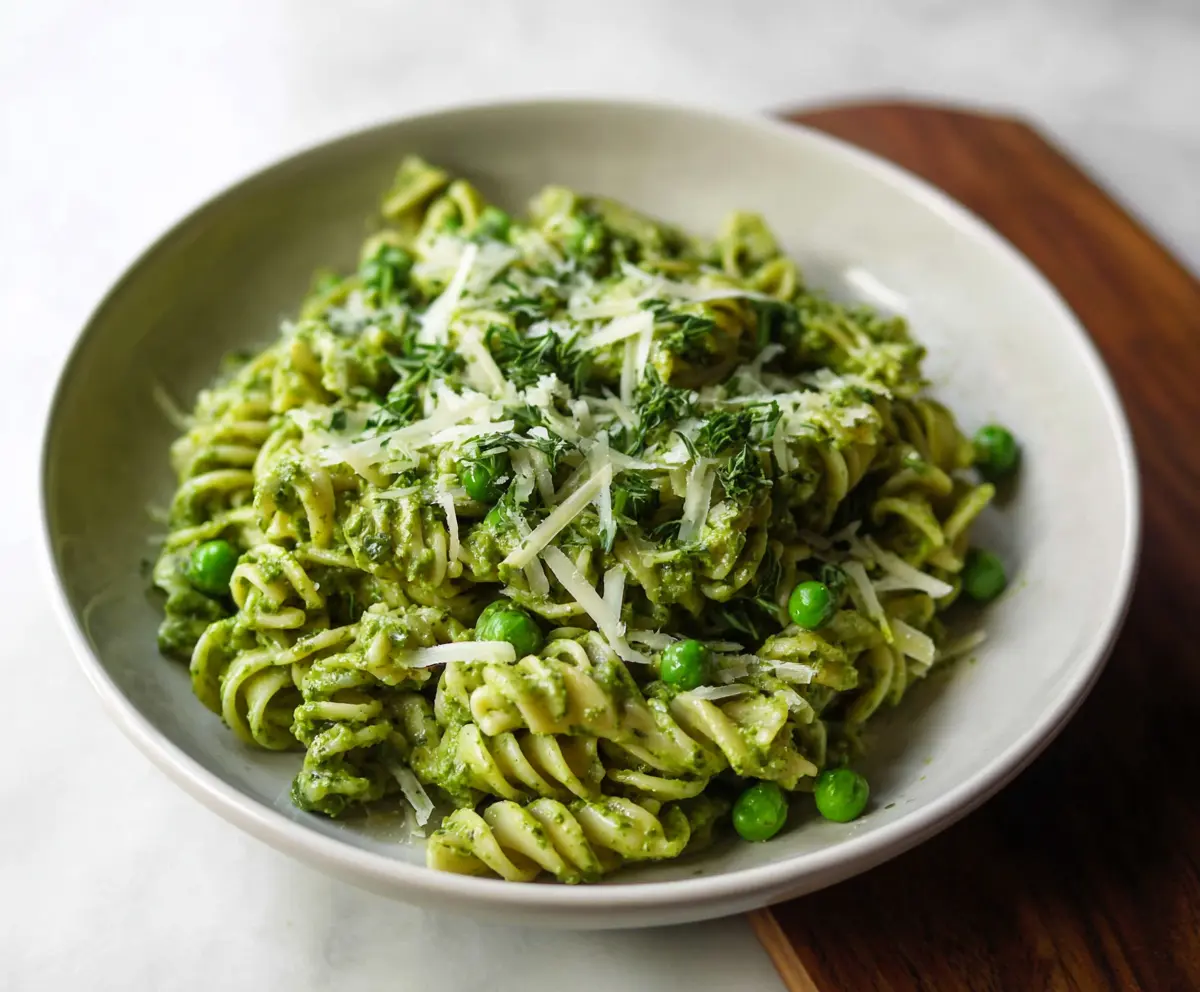
Dish out the pasta and garnish with extra grated Parmesan and fresh basil leaves. Taste and add any extra salt, pepper, or lemon juice if needed. Enjoy your fresh, vibrant Spring Pea Pesto Pasta!
Can I Use Frozen Peas Instead of Fresh?
Yes, frozen peas work great! Just thaw them in hot water briefly or blanch them like fresh peas to keep their bright color and flavor.
How Can I Store Leftover Spring Pea Pesto Pasta?
Store leftovers in an airtight container in the fridge for up to 3 days. Reheat gently in a pan with a splash of water or olive oil to keep it creamy.
Can I Make the Pea Pesto Ahead of Time?
Absolutely! You can prepare the pesto a day ahead. Store it in an airtight container in the fridge and stir in a little olive oil before serving to freshen it up.
What Pasta Types Work Best?
Short, curly pasta like rotini or fusilli is perfect because it holds the pesto well. You can also use penne, farfalle, or even spaghetti if preferred.