
TL;DR
- Use the DSB rule: every meal should have one Deep note, one Savory middle, and one Bright finish. If one layer is missing, dinner often tastes flat.
- Before adding more salt, fix the missing layer with a low-cost move such as browning onion, blooming tomato paste, adding broth or beans, or finishing with lemon, vinegar, herbs, or yogurt.
- USDA says the average American family of four loses $1,500 a year to uneaten food, so making leftovers taste different is a money-saving cooking skill, not just a chef trick. (usda.gov)
- If you are trying to keep sodium reasonable, herbs, spices, citrus, and vinegar matter because the FDA says most dietary sodium comes from packaged and prepared foods, not the salt shaker. (fda.gov)
The cheapest dinner is not the one with the absolute lowest ingredient cost. It is the one you will still want tomorrow. That is why flavor layering matters in a budget-minded kitchen. USDA says the average American family of four loses $1,500 a year to uneaten food, and MyPlate specifically recommends planning to repurpose leftovers with pantry staples, herbs, and spices so meals feel different across the week. A simple flavor rule helps you do exactly that: make beans, rice bowls, eggs, pasta, soups, and roasted vegetables taste finished instead of merely edible. (usda.gov)
The rule: build deep, carry savory, finish bright
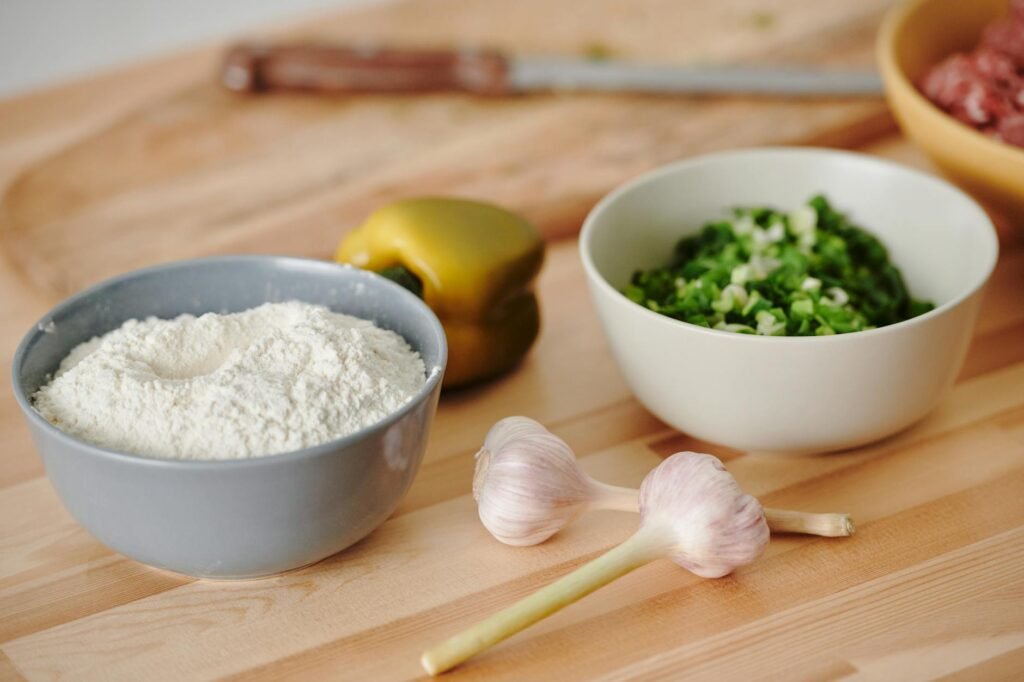
Here is the rule in plain English: build one deep note, carry one savory middle, and finish with one bright note. Think in layers, not in last-second salt. The American Heart Association explains that flavor comes from taste plus aroma, and understanding how salty, sour, bitter, sweet, and umami interact makes it easier to balance food. In practice, the deep note is browned onion, garlic, toasted spices, or tomato paste. The savory middle is broth, beans, mushrooms, cheese, or browned meat. The bright note is lemon, vinegar, herbs, yogurt, or pepper added near the end. When all three show up, even inexpensive ingredients taste intentional. (heart.org)
| If the meal tastes like this | Likely missing layer | Low-cost fix | When to add it |
|---|---|---|---|
| Soup, beans, or grains taste dull | Bright | 1 to 2 teaspoons lemon juice or vinegar, plus herbs if you have them | After the heat is off |
| The ingredients are fine but the flavor feels weak | Deep | Cook onion or garlic longer, toast spices, or brown tomato paste | At the start |
| Tomato sauce tastes sharp but hollow | Savory | Mushrooms, a splash of broth, a Parmesan rind, or more simmer time | Mid-cook |
| Roasted vegetables feel heavy | Bright and contrast | Lemon, yogurt sauce, chopped herbs, or toasted crumbs | Right before serving |
| Rice bowls taste like separate parts instead of one meal | Savory | A quick pan sauce, seasoned beans, pan drippings, or a spoonful of yogurt sauce | Just before serving |
| Eggs, potatoes, or leftover chicken taste boring | Bright | Hot sauce, chives, pickled onion, black pepper, or a squeeze of citrus | At the table |
The DSB Check: a 30-second flavor audit
An easy way to remember the DSB check is through layers: deep, savory, and bright. Each meal receives one point for every layer used. For example, a dish made with lentils, onions, and a stock base but lacking finish (acids) will score 2 points; roasted potatoes dressed with only oil and salt would score 1 point; whereas a bowl of beans with charred onions, seasoned beans, plus either lime sauce or yogurt would receive 3 points.
In general, if your meal scores 0 or 1 point, it will probably have a flat taste or at best an insignificant one-note flavor profile. At 2 points, your meal could be acceptable for lunch on a weekday but has potential to improve in taste. At 3 points, you will not be tempted to add more salt, cheese, or sauce to achieve desirable flavors. This is important because you can save money by reducing the number of times you try to “rescue” the results of a recipe by adding additional seasoning before dinner has been cooked.
- Deep means cooked flavor: onion, garlic, ginger, scallions, browned tomato paste, toasted chili flakes, curry powder, cumin, smoked paprika, or crisped edges on vegetables.
- Savory means body: broth, pan drippings, soy or tamari, beans cooked in seasoned liquid, mushrooms, anchovy, Parmesan, miso, or browned meat.
- Bright means lift: lemon juice, lime, vinegar, yogurt, fresh herbs, scallions, hot sauce, or black pepper added late.
- Add the bright layer last whenever possible. It is supposed to wake the dish up, not disappear into it.
- If you only have one rescue move left, use acid for heavy foods and a savory booster for thin foods.
- If the meal already tastes salty, do not keep seasoning blindly. Look for the missing layer instead.
What this looks like in a real weeknight dinner
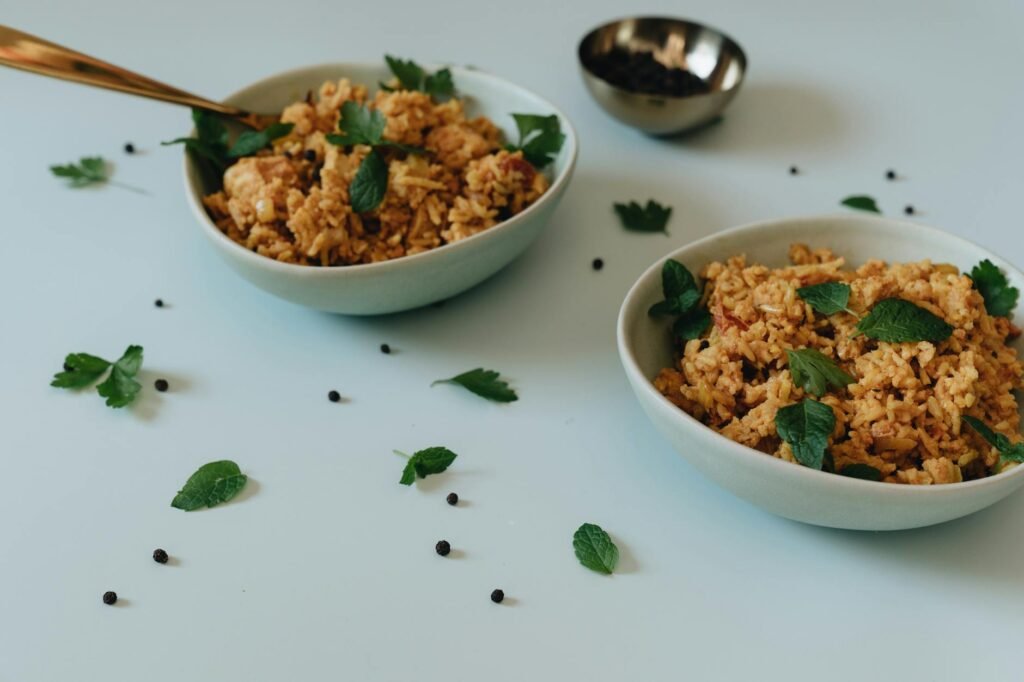
Take a sample store-brand dinner for a household cooking once and eating twice: 1.5 pounds of chicken thighs for $6.49, a 1-pound bag of rice for $1.79, 2 cans of white beans for $2.38, 1 onion for $0.99, 1 lemon for $0.79, a partial can of tomato paste for about $0.55, a small portion of Greek yogurt for about $1.50, and parsley for $1.29. Total: about $15.78 for 6 servings, or roughly $2.63 a serving. On night one, that can be a decent chicken-rice-bean bowl. On night two, it risks tasting repetitive unless you layer it. Brown onion and tomato paste for the deep note, use chicken drippings and seasoned beans for the savory middle, and finish the reheated leftovers with lemon, parsley, and yogurt for the bright layer.
That is not culinary fussiness. It is budget protection. If two leftover servings get eaten instead of ignored and replaced with a takeout order, the flavor additions did real financial work. MyPlate makes the same basic point in a more official way: reuse leftovers, keep grains and beans around, and use herbs and spices to make the same core ingredients feel different across the week. (myplate.gov)
A five-minute layering sequence that works on most meals
- Begin by adding the fat and aromatics to the skillet. Heat 1-2 tablespoons of butter or oil in the skillet until hot, then add the onion, garlic, or ginger, and cook until soft and smelling sweet – as opposed to raw. After 2 more minutes of cooking this, you will have established a deep flavor base for last night’s meal.
- Wake up the pantry ingredients. Add dry spices or tomato paste and cook them for 30 to 60 seconds so they bloom instead of tasting dusty or metallic.
- Build the savory middle in the body of the dish. Use broth, beans, mushrooms, soy, Parmesan, or the browned bits loosened from the pan.
- Salt in stages, not in a panic. Use a light hand early, taste again after reduction, and remember that the FDA says most dietary sodium comes from packaged and prepared foods, not just the salt you add at home. (fda.gov)
- Finish off the heat. Add brightness and contrast with lemon, vinegar, chopped herbs, yogurt, scallions, toasted nuts, or black pepper.
When the first fix is not enough
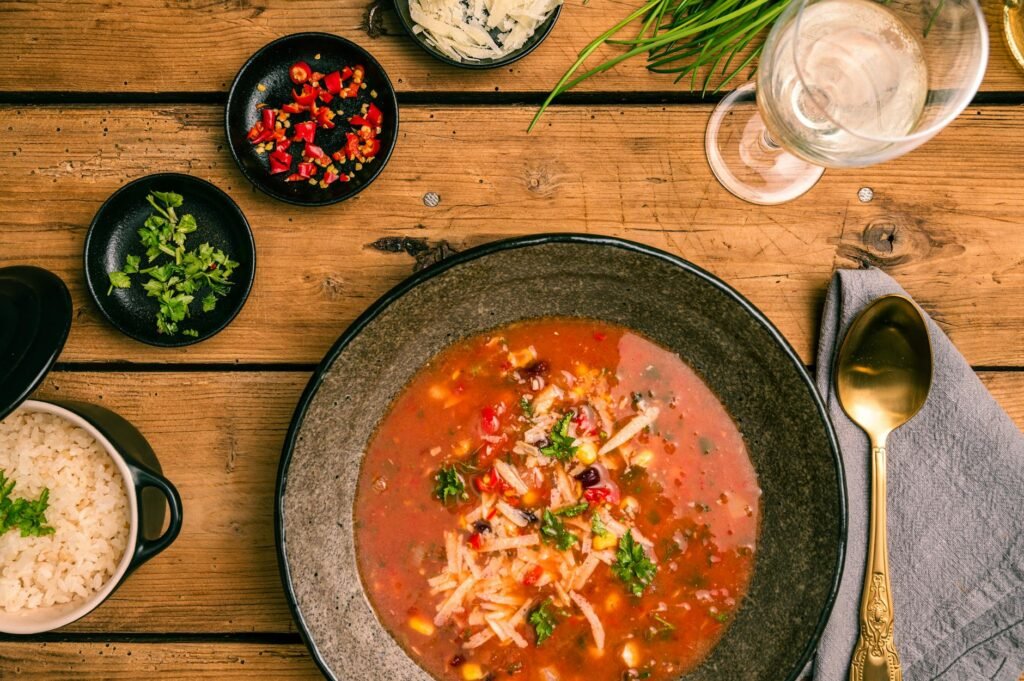
Certain dishes don’t require additional layers; they need to be more concentrated. A soup that has a watery flavor can be made to taste better by reducing it. Roasting your vegetables longer or at a higher heat will yield a better flavor than using vegetables that lack depth. When ground meat does not brown, there is no substitute for adding vinegar to improve the flavor. Simply stirring acid into a sauce too early can create a sharp-tasting sauce without raising it up.
There is a very easy backup plan. To start, determine if the problem with your dish is caused by it being too lightly or very lightly simmered, due to a lack of seasoning/too diluted. Then, correct the structure of the dish by doing the following, in order: 1. Simmer it to concentrate the flavours; 2. Sear some of the food to provide additional crusting, such as meat; 3. Add an unsalted base such as rice or beans; 4. Fold small amounts of flavourful (umami) boosters, such as tomato paste, mushrooms, or stock, into the food as needed. 5. Add an acidic component to brighten the food again. Texture also matters! The use of toasted breadcrumbs, roasted pumpkin seeds, chopped peanuts, and/or crispy chickpeas may make an economical meal feel satisfying, even with a minimal number of ingredients.
Common mistakes that make bland food worse
- Adding acid before the dish has enough savory depth. A squeeze of lemon cannot replace browning, broth, or a decent base.
- Using bottled sauces as a shortcut without checking sodium. They can add flavor, but they can also overwhelm the dish quickly.
- Using old spices and expecting a big payoff. If your paprika or cumin smells faint in the jar, it will taste faint in the pan.
- Adding three rescue ingredients at once. If you throw in soy sauce, vinegar, and cheese together, you learn nothing about what actually helped.
- Salting before liquids reduce, then salting again at the finish. This is a common path to oversalting soups, beans, and sauces.
- Forgetting texture. Soft, creamy, same-temperature food often reads flatter than it really is. A crisp topping or a fresh garnish can solve part of the problem.
Warning
If you are watching sodium, remember that the FDA and the American Heart Association say more than 70% of the sodium in US diets comes from packaged, prepared, and restaurant foods, not just table salt. That is one reason lemon juice, vinegar, garlic, herbs, and pepper are such useful flavor tools. This article is general cooking information, not medical advice. If a clinician has told you to limit sodium or acidic foods, adapt the rule to your plan or ask a registered dietitian for personalized guidance. (fda.gov)
Run the Split-Bowl Test before you doctor the whole pot
- Spoon 3 small portions of the dish into separate bowls or cups before you change the full batch.
- Each sample has 1 change. I changed the amount of each ingredient. For example, instead of putting a pinch of salt on each sample, I put 1/4 tsp lemon juice on each sample and then used a savoury enhancer such as broth concentrate, yogurt or cheese to each sample.
- Taste side by side. Do not ask which sample tastes strongest. Ask which one tastes most complete.
- Scale up only the winning change to the main pot, pan, or tray.
- Write down the amount if you want to repeat the result on the next batch or on leftovers later in the week.
Completing a small audit on yourself might be the easiest way to confirm what works for you at home with your cooking. After two or three meals patterns will start to show, such as beans usually need something acidic added at the end; tomato-based sauces usually either require additional caramelised or umami flavour; roasted vegetables usually require a bright/flavourful finish (like cream or acid). The overall intention should not be ‘complex’ like you may expect in a restaurant; it should simply be ‘complete’ enough that any left overs are still good and therefore creating less of a need to use a food delivery app.
The bottom line
Think about consistency with your existing meals in the way they’re seasoned – do they have a low note? A mid-note? A high note? Performing this check will turn inexpensive pantry staples into family favorites that you’ll want to eat frequently, resulting in savings on your food expenses. It’s a common misconception that creating good-tasting food is done by using only high-quality, expensive ingredients; the reality is that most food limits DO have quality, but they can also be enhanced. Quality can be enhanced simply by way of better order, by using just a few staples from the pantry, and doing a good job of finishing the dish off.
Is flavor layering just another way to say add more salt?
No. Salt matters, but flavor is broader than salt alone. The American Heart Association explains that flavor reflects both taste and aroma, and the FDA notes that most dietary sodium comes from packaged and prepared foods. In practice, many flat meals improve more from acid, herbs, browning, or a savory base than from another heavy pinch of salt. (heart.org)
What if I only keep dried herbs, not fresh?
That is fine. Dried herbs and spices are budget-friendly and useful for the deep layer. The American Heart Association notes that dried seasonings benefit from time in the dish, while tender fresh herbs are often best added late or not cooked at all. Use dried oregano, thyme, cumin, paprika, and garlic powder during cooking; use fresh parsley, cilantro, basil, or chives at the end when you have them. (heart.org)
Can bottled lemon juice or vinegar work, or does it have to be fresh?
Both options will work. Fresh citrus typically has a more intense aroma compared to bottled lemon juice or plain vinegar, but either option can work for the added layer of brightness that should be added in small quantities and then adjusted for taste until the dish does not taste sour or has minimal sourness but has more brightness.
How do I fix food that is already too salty?
Try diluting before you season more. Stir in some unsalted food like cooked rice, potatoes, beans, or pasta, or extra broth without salt. A little acid can confuse the taste buds, but be aware that it doesn’t take sodium out of the dish. In soups and stews for example, if you portion out half the diluted batch and freeze it you will avoid turning a repair into a gargantuan batch.
How long are layered leftovers safe to keep?
USDA FSIS says leftovers can generally be kept in the refrigerator for 3 to 4 days or frozen for 3 to 4 months. Reheat leftovers to 165°F, and refrigerate them promptly rather than leaving them on the counter for hours. (fsis.usda.gov)
Does this help with meal planning, or is it just a cooking trick?
It helps with both. MyPlate specifically encourages planning to reuse leftovers and using pantry staples, herbs, and spices to make meals feel different over the week. That is exactly what flavor layering does. (myplate.gov)
References
- FDA: Sodium in Your Diet – https://www.fda.gov/food/nutrition-education-resources-materials/sodium-your-diet
- American Heart Association: Understanding Tastes and Food Flavors – https://www.heart.org/en/healthy-living/healthy-eating/cooking-skills/meal-planning/understanding-tastes-and-food-flavors
- American Heart Association: How to Reduce Sodium in Your Diet – https://www.heart.org/en/healthy-living/healthy-eating/eat-smart/sodium/how-to-reduce-sodium
- American Heart Association: How to Use Fresh Herbs – https://www.heart.org/en/healthy-living/healthy-eating/cooking-skills/preparing/how-to-use-fresh-herbs
- USDA MyPlate: Planning for Savings, Leftovers Edition – https://www.myplate.gov/sites/default/files/2024-08/MyPlate-Planning-For-Savings-Leftover-Edition.pdf
- USDA MyPlate: Efficient Eats, Cook Once Eat Multiple Times – https://www.myplate.gov/sites/default/files/2024-09/MyPlate-Resource-Efficient-Eats-Cook-Once-Eat-Multiple-Times.pdf
- USDA: More Easy Steps to Reduce Food Waste – https://www.usda.gov/sites/default/files/documents/CONSUMERS-More-Easy-Steps.pdf
- USDA FSIS: Leftovers and Food Safety – https://www.fsis.usda.gov/food-safety/safe-food-handling-and-preparation/food-safety-basics/leftovers-and-food-safety