
Most household food waste does not start with spoiled produce. It starts with almost-useful ingredients that never become a planned meal: half a pepper, one cup of rice, a few slices of chicken, a spoonful of pesto, two tortillas. Without a system, those odds and ends get nibbled, ignored, or tossed. That is a budget problem as much as a cooking problem. USDA says food waste is estimated at 30% to 40% of the U.S. food supply, and EPA says food is the single most common material sent to landfills. (usda.gov)
TL;DR
- Stop asking, “What can I make with this one thing?” Ask, “Which meal format will absorb these ingredients?”
- Use the BASE Test: every real leftover meal needs a Base, an Anchor, a Sauce, and an Extra.
- If you are missing one role, buy the cheapest missing piece instead of shopping for a whole new recipe.
- A small pantry bridge, such as eggs, tortillas, pasta, rice, broth, or canned beans, can turn scraps into dinner for less than takeout or another grocery run.
- Food safety is the guardrail: refrigerate perishable food within 2 hours, keep the fridge at 40°F or below, use many leftovers within 3 to 4 days, and reheat leftovers to 165°F. (fda.gov)
Why leftovers keep turning into snacks
People often make the mistake of approaching leftover foods as if they were a creativity challenge. You open the fridge, see a bunch of mismatched ingredients and you think, “What could I make with these?” That is not going to happen on Tuesday nights when it’s busy. So, cheese gets nibbled at, rice just hangs out, and eventually somebody has a bowl of cereal for dinner.
Typically a real meal would not be random. A real meal is made from an idea structure, that gives you substance, flavor, and enough bulk to complete your meal. Once you can view leftover ingredients as parts of a meal instead of isolated scraps, you can manage your refrigerator better and control your grocery bill more easily.
Use the BASE Test before you cook anything
If you’re looking for an easy way to convert leftovers into meals, rather than snacking on food, try this simple system called the BASE Test. Gather all your ingredients that will soon expire and separate them into four categories. If you find more than three of the four categories filled by your ingredients, you probably have enough food available to make a complete meal. If you have all four categories filled, then quit thinking and start cooking!
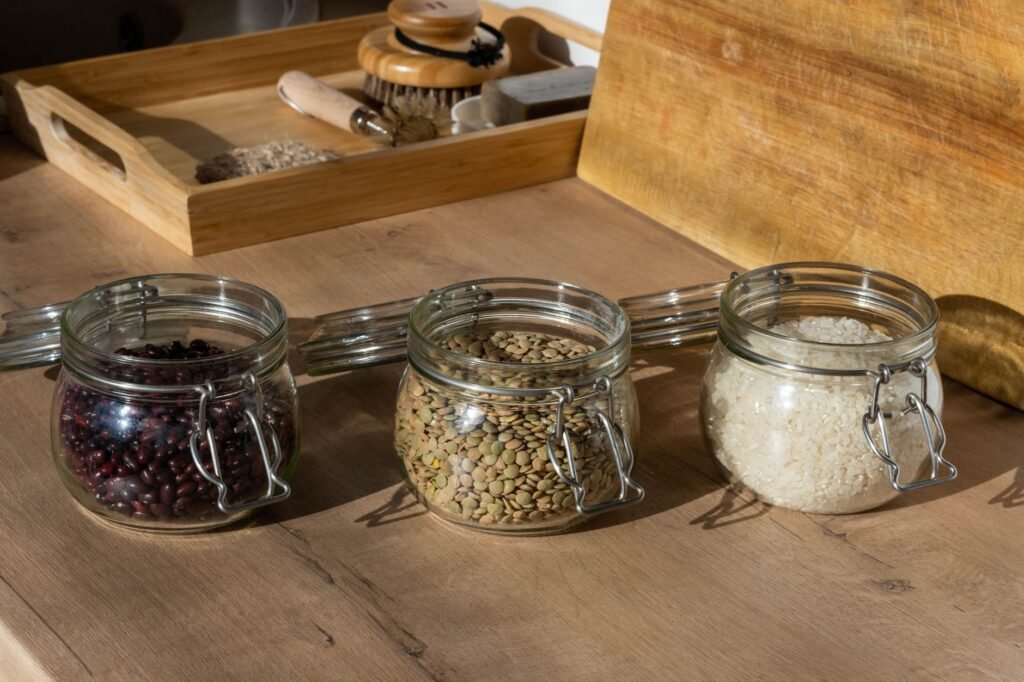
- Base: something that carries the meal, such as rice, pasta, potatoes, bread, noodles, beans, tortillas, or cooked grains.
- Anchor: the ingredient that makes the meal feel substantial, such as chicken, tofu, eggs, beans, ground meat, tuna, roasted vegetables, or lentils.
- Sauce: the ingredient that makes leftovers taste intentional, such as salsa, pesto, broth, soy sauce, marinara, yogurt, curry paste, peanut sauce, or shredded cheese.
- Extra: the ingredient that adds volume, texture, or freshness, such as spinach, frozen peas, onions, mushrooms, tomatoes, herbs, slaw mix, or a handful of fruit.
Following this decision-making principle: if 4 of your 4 components fit your current meal plan, cook it immediately; if 3 of your 4 components fit your current meal plan, you need to find something inexpensive (like a person) to tie the other 3 together; if you have 2 or fewer of your 4 components, either freeze them, combine them with a different day’s leftovers, or stop trying to make a complete meal. This is the distinction between an intentional meal and a bunch of random food items.
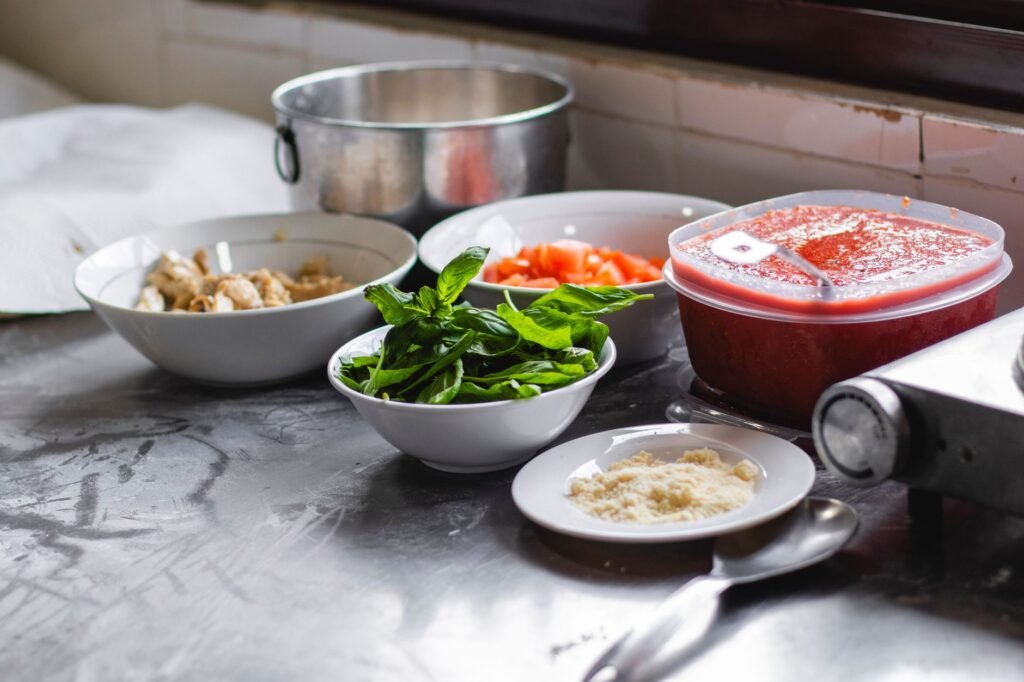
Food safety beats thrift. Refrigerate perishable food within 2 hours, or within 1 hour if the temperature is above 90°F. Keep the fridge at 40°F or below. Many cooked leftovers are best used within 3 to 4 days, and reheated leftovers should reach 165°F. If you do not know how long something sat out, it is safer to throw it away than to try to save money with it. (fda.gov)
The lowest-cost fix is usually one missing piece
After you perform the BASE Test, what to do next is usually simple. Many leftover situations are not due to missing a recipe but are due to missing one type of ingredient (missing a base when you have chicken and vegetables, or missing an anchor when you have rice and vegetables). The least expensive way to fill in the gap is to keep or buy one low-cost bridge ingredient to complete the structure rather than to purchase a shopping cart full of new groceries.
| If your leftovers look like this | Best meal format | Low-cost bridge ingredient | Why it works |
|---|---|---|---|
| Bits of cooked chicken, beef, tofu, or beans plus vegetables | Fried rice, grain bowl, or noodle bowl | Rice, ramen, or frozen rice | The base stretches small amounts of protein into two or more portions. |
| Roasted vegetables plus a little cheese or sauce | Frittata, pasta toss, or baked potatoes | Eggs or pasta | Eggs and pasta are cheap structure builders that make leftovers feel complete. |
| Cooked potatoes plus greens or onions | Hash or breakfast-for-dinner skillet | Eggs | One or two eggs turn side dishes into a filling meal. |
| Tortillas plus scraps of protein or vegetables | Quesadillas, tacos, or wraps | Canned beans or shredded cheese | Handheld meals hide small leftovers well and use little cleanup. |
| Stale bread plus soft vegetables or herbs | Strata, soup thickener, or panzanella-style salad | Eggs or broth | Bread absorbs flavor and rescues food that is still good but losing texture. |
| A lot of little containers with no obvious match | Soup or “everything” grain soup | Broth plus one can of beans | Soup is the safest format for mixed small quantities and odd shapes. |
A realistic $34 rescue from one messy fridge
Looking at the refrigerator on a Wednesday night: – 2 cups cooked rice – 1.5 cups rotisserie chicken – half an onion – 6 mushrooms – 0.5 bag of spinach – 4 tortillas – 1 cup shredded cheese – half a jar salsa – 4 eggs
It’s hard to create a meal plan from these ingredients, so they will probably end up going to waste in the future.
Run the BASE Test and the structure becomes obvious. Base: rice and tortillas. Anchor: chicken and eggs. Sauce: salsa and cheese. Extra: onion, mushrooms, spinach. That turns into three actual meals: chicken fried rice for two lunches, mushroom-spinach quesadillas for dinner, and egg-and-rice bowls for breakfast or a second dinner. If that household would otherwise buy one $18 takeout dinner and two $8 lunches, the leftover plan avoids about $34 in new spending while using food already paid for. The point is not perfect accounting. The point is that small, structured rescue meals can replace surprisingly expensive default spending.
Run a 10-minute fridge triage once or twice a week
- Pull out everything that is already cooked or clearly needs to be used soon. Do not triage the whole kitchen. Start with the items most likely to become waste.
- Sort those ingredients into BASE roles on the counter: bases together, anchors together, sauces together, extras together.
- Choose only two meal formats for the next 48 hours. Good options are fried rice, quesadillas, soup, pasta, grain bowls, hashes, and frittatas.
- Add one bridge ingredient to your list if needed. Think eggs, pasta, broth, beans, rice, or tortillas. One cheap helper is usually enough.
- Portion leftovers into clear containers and label them with the cooked date. If a meal is already built, label the container with the meal name too.
- If you are not realistically going to eat an ingredient in the next day or two, freeze it while it is still useful instead of waiting until it becomes questionable.
Meal formats that make odds and ends feel deliberate
- Fried rice or grain skillet: Best for small amounts of protein, cooked rice, and vegetables that need to be chopped small. Add an egg or two and a strong sauce.
- Quesadillas or tacos: Best for scraps that are already cooked. A little cheese, beans, or salsa makes the filling feel planned, not random.
- Soup: Best when you have several small containers and not enough of any one thing. Broth plus beans or pasta gives instant structure.
- Frittata or egg bake: Best for roasted vegetables, cooked potatoes, herbs, and tiny amounts of meat or cheese. This is one of the cheapest rescue formats.
- Pasta toss: Best for leftover vegetables, a half jar of sauce, cooked sausage, meatballs, or greens. Pasta is a budget stretcher, not just a side.
- Loaded baked potato or baked sweet potato: Best when you have toppings but no base. Chili, broccoli, chicken, beans, and cheese can all work here.
- Big salad with a hot element: Best for stale bread, leftover grains, cooked chicken, roasted vegetables, and a sharp dressing. Add something warm so it eats like dinner instead of a side.
The qualities of these types of cooking methods are similar in that they do not have to use exact amounts of any one particular ingredient and they allow for the incorporation of small items into a larger item. Therefore, these methods are ideal for home cooks who want to create delicious meals on a lower budget. The goal is not to create winners of cooking competitions; the goal is to save food and money by making fewer mistakes when cooking.
Common mistakes that cost money
- Saving ingredients without saving a plan. A container of rice is not a meal plan unless you know what it is for.
- Trying to use every leftover in one dish. That usually creates muddy flavor and a meal nobody wants the next day.
- Ignoring texture. Wet leftovers need something crisp, and dry leftovers need sauce, broth, or fat.
- Buying fresh ingredients to use leftovers, then creating a second round of leftovers. If you need a bridge ingredient, keep it cheap and versatile.
- Waiting for a perfect leftover night. The best rescue meal usually happens 24 to 48 hours earlier than you think.
- Treating date labels like a hard safety deadline. For most packaged foods, those labels are often about quality, not safety, if the food has been handled properly. (fsis.usda.gov)
When the leftovers still do not add up to dinner
Some leftovers are not worth forcing. Maybe you only have a few spoonfuls of several unrelated dishes. Maybe the textures are too far gone. Maybe your household will happily eat a remixed bowl but reject a mystery casserole. In those cases, use a backup plan: freeze components separately, turn one portion into lunch instead of dinner for four, or pivot to breakfast-for-dinner with eggs and toast. And if food is no longer suitable to eat, composting is better than landfill, but EPA ranks preventing wasted food and keeping edible food in the human food chain above composting. (epa.gov)
The financial lesson is simple: not every item has to be heroically saved. The goal is to rescue the usable majority with low effort. A system that works 70% of the time is better than an ambitious plan you never follow.
How to pressure-test this system for two weeks
Do not judge your leftover habits by memory. Run a short audit. For two weeks, treat leftover cooking like a small household experiment and look for proof that it is saving food and money.
- Keep a running note on your phone called “Use first.” Add every cooked item or open produce that should become a meal in the next two days.
- Write down each rescue meal and what it replaced: takeout, a deli lunch, a convenience dinner, or another grocery trip.
- Put a thermometer in the fridge. FDA says a refrigerator should be kept at 40°F or below. (fda.gov)
- Label leftovers with the date cooked. FoodSafety.gov says many cooked leftovers, soups, and stews are best used within 3 to 4 days in the refrigerator. (foodsafety.gov)
- Use FoodKeeper when you are unsure about storage times for a specific food; the tool was developed with USDA and is meant to help households maximize freshness and quality while reducing waste. (foodsafety.gov)
- Check yourself on date labels. FDA and USDA say that, except for infant formula, many package dates are quality dates rather than safety deadlines. (fsis.usda.gov)

Bottom line
Instead of treating leftovers as haphazard scraps, think of them as true meals once you give them purpose. Use the BASE testing method to determine whether to keep any low-cost bridge ingredients around and build from a repetitive meal-building format rather than looking for new recipes. This can help reduce food waste and eliminate the need to resort to takeout, as well as making your grocery money stretch farther without increasing the difficulty of cooking for yourself at night!
FAQ
What if I only have tiny amounts of several ingredients?
It usually ends up being a soup, fried rice, quesadilla, or frittata type of dish. A small number of tiny portions is not going to make a good looked at on a plate for a meal by themselves; rather, they are better combined with lots of small parts with a lot of flavor. The error is waiting until all of the containers to be prepared are too small for the food and too old.
Should I buy extra groceries just to use leftovers up?
At times, make your purchase as limited as possible; it is better to add that missing element to an inexpensive recipe than to purchase an entirely new meal. It is preferable to use pantry items such as eggs, pasta, rice, tortillas, broth, canned beans and frozen vegetables rather than purchase an entirely new basket of perishable food.
How long can cooked leftovers stay in the fridge?
Many cooked leftovers are best used within 3 to 4 days in a refrigerator kept at 40°F or below. FoodSafety.gov also notes that frozen foods kept continuously at 0°F or below remain safe indefinitely, although quality can decline over time. (foodsafety.gov)
Can I eat food after the date on the package?
Often, yes, if it has been stored properly and shows no signs of spoilage. USDA and FDA say most package dates are about best quality, not safety; infant formula is the key federal exception. (fsis.usda.gov)
When should I throw leftovers out instead of trying to save them?
Do not try to rescue perishable food that has been left out for more than 2 hours, or more than 1 hour if the temperature is above 90°F. And when you reheat leftovers, aim for 165°F. Savings are never worth gambling on questionable food. (fda.gov)
References
- USDA – Food Loss and Waste – https://www.usda.gov/about-food/food-safety/food-loss-and-waste
- US EPA – Composting – https://www.epa.gov/sustainable-management-food/composting
- US EPA – Wasted Food Scale – https://www.epa.gov/sustainable-management-food/wasted-food-scale
- USDA FSIS – Leftovers and Food Safety – https://www.fsis.usda.gov/food-safety/safe-food-handling-and-preparation/food-safety-basics/leftovers-and-food-safety
- FoodSafety.gov – Cold Food Storage Chart – https://akaprod-www.foodsafety.gov/food-safety-charts/cold-food-storage-charts
- FoodSafety.gov – Safe Minimum Internal Temperatures – https://www.foodsafety.gov/food-safety-charts/safe-minimum-internal-temperatures
- FDA – How to Cut Food Waste and Maintain Food Safety – https://www.fda.gov/food/consumers/how-cut-food-waste-and-maintain-food-safety
- USDA FSIS – Food Product Dating – https://www.fsis.usda.gov/food-safety/safe-food-handling-and-preparation/food-safety-basics/food-product-dating
- FoodSafety.gov – FoodKeeper App – https://www.foodsafety.gov/keep-food-safe/foodkeeper-app?os=app