
TL;DR
- The rushed step is the browning window: the stretch between cooked and truly browned.
- If you add broth, tomatoes, or a lid too early, you trap moisture and trade browning for steaming.
- Use the Sizzle-Space-Color Test before moving to the next step.
- This matters most with onions, mushrooms, tomato paste, chicken thighs, and ground meat.
- Brown color is not a safety test for meat. Use a food thermometer. (fsis.usda.gov)
Flat weeknight food usually is not a seasoning problem first. It is often a timing problem. Home cooks move from raw ingredients to broth, canned tomatoes, or a lid before the pan has had time to build a browned base, so chicken stays pale, mushrooms leak water, and onions soften without developing much depth. That missed browning window is where a lot of savory flavor gets built, and it matters even more when you are trying to make ordinary, budget-friendly ingredients taste like a complete meal. (home.sandiego.edu)
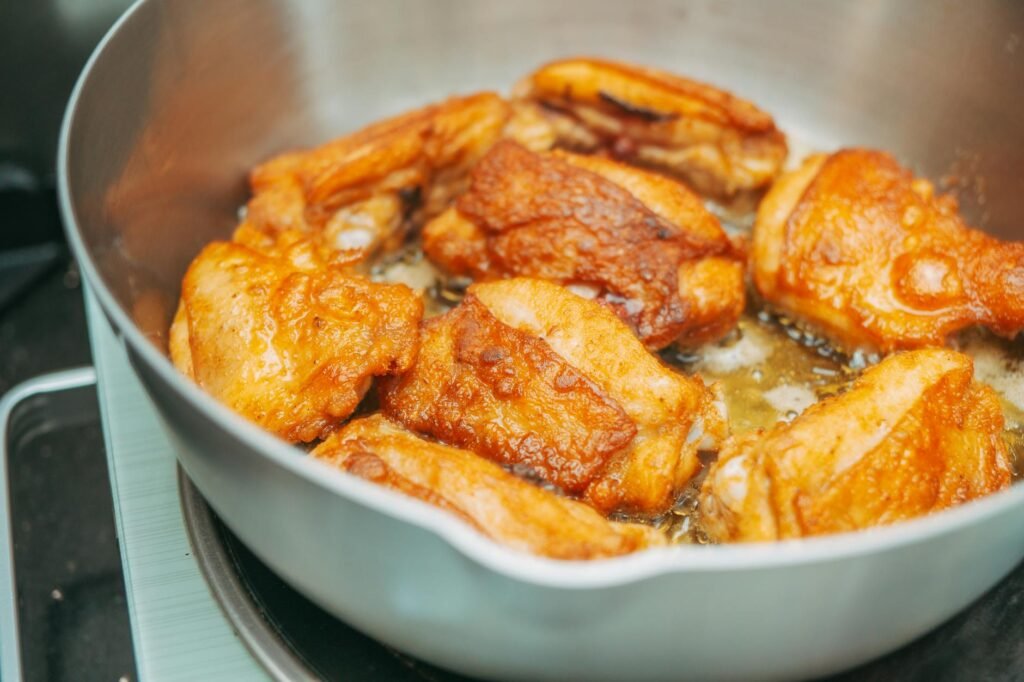
The step is not seasoning. It is waiting long enough to brown.
Cooked through and properly browned are not the same thing. The University of San Diego browning lab describes the Maillard reaction as a non-enzymatic reaction between amino acids and reducing sugars, and USDA’s National Agricultural Library describes it as a broad set of reactions that occurs during the processing and cooking of foods. In kitchen terms, this is the stage where food goes from merely hot to deeply savory. (home.sandiego.edu)
Most rushed pans fail in one of three ways: they are crowded, the food goes in wet, or liquid is added as soon as the surface loses its raw look. UMN Extension advises cooks not to crowd the pan because water seeps out if the heat is too low or the pieces are packed too closely, and USDA notes that pan temperature drops when cold food hits a hot surface. Once that happens, you are steaming more than browning. (extension.umn.edu)
Use the Sizzle-Space-Color Test
Use this simple measurement to test when it is time for the next addition instead of relying on the time written in the recipe. I use the Sizzle-Space-Color test to remember when to put in an additional item. This test is easy and will work with chicken, onions, mushrooms, sausage, and tomato paste.
- Sizzle: You should hear a steady, assertive sizzle. If the pan sounds watery or quiet, surface moisture is still in charge.
- Space: Leave visible gaps. As a home-cook rule, aim to keep roughly one-third of the pan surface open when you want true browning.
- Color: Wait for real color, not just the loss of pink. Look for deep gold, chestnut, or brown patches.
- Correction: If one of those signals is missing, do not add broth, tomatoes, or a lid yet. Spread the food out, blot moisture, raise the heat slightly, or brown in batches.
Tip: Think of browning as a gate, not a timer. If the pan has not passed the test, it is not time for the next step.
A weeknight example with the same groceries
For dinner, you need the following items: 1 1/2 pounds of chicken thighs, 1 large onion, 8 ounces of mushrooms, 1 tablespoon of tomato paste, 1 cup of broth, and cooked rice on the side. In order to make this meal quickly, all of the ingredients go in one skillet which means they get packed together, moisture gets pooled up when mushrooms hit the bottom of the pan and before anything has browned, you get a thin result; it’s only good enough to eat. In the preferred way to prepare the meal, chicken is first browned two times; the onions and mushrooms stay in the pan long enough for the moisture to evaporate from them before the edges turn brown; before the broth goes in, the tomato paste will turn from bright red to rust colored. You have used the same ingredients, same pan, and made the same meal, but now there is more flavor and no need for the extra cheese, or sauce to save the dish because you did it this way.
| Ingredient or base | Rushed sign | Ready sign | Next move |
|---|---|---|---|
| Chicken thighs or stew meat | Opaque but pale | Brown patches and the piece releases more easily | Remove to a plate, brown the next batch, then deglaze |
| Onions | Soft, wet, and still sharp-smelling | Translucent with browned edges and a sweeter aroma | Add the next aromatic or paste |
| Mushrooms | Pan full of liquid | Liquid mostly gone, mushrooms tightened and browned | Season and continue |
| Tomato paste | Bright red and raw-smelling | Darker brick red with a sweeter, fuller aroma | Stir in broth, beans, or canned tomatoes |
| Ground meat | Gray and crumbly | Separated crumbles with browned spots and some fond | Drain only if truly excessive, then keep building flavor |

What proper browning looks like in common ingredients
Due to variations in burner strength, pan material, size of the batch and moisture, there are huge differences between the length of cooking times for various recipes. Also, sounds and visuals are better indicators of timing than a clock. If you are aware of the sequence, your odds of moving on too soon are reduced.
- Onions: First they look glossy and wet, then translucent, then lightly browned at the edges. The sharp smell softens before the sweeter smell shows up.
- Mushrooms: They usually release water before they brown. Wait for the liquid to cook off and the pan to start sizzling again.
- Tomato paste: The raw canned smell fades as the color deepens. That short extra cook can change the base of a chili, soup, or braise.
- Ground meat: The goal is not uniform gray. You want some direct contact with the pan so browned bits develop.
- Chicken thighs: Once the underside has browned enough, it tends to release more willingly from the pan.
Where home cooks lose flavor
- Starting with a skillet that is warm instead of properly preheated.
- Filling every inch of the pan. If pieces touch and trap moisture, the pan stays wet.
- Moving food every 20 seconds. Browning needs contact time.
- Adding onions, mushrooms, garlic, and meat all at once, even though they release moisture at different speeds.
- Pouring in broth, wine, tomatoes, or cream before the pan has built color.
- Treating brown color as proof the meat is safely cooked. USDA says color alone is not a reliable doneness test for ground beef, and browned food on the outside can still be undercooked inside. (fsis.usda.gov)
Warning: Browning is about flavor, not safety. USDA says poultry should reach 165°F, whole cuts of beef, pork, lamb, and veal 145°F as measured with a food thermometer, and ground beef 160°F. Use a thermometer rather than color. (fsis.usda.gov)
When more browning is not the answer
While many recipes call for brown or dark brown bases, some items require more subtle methods during the cooking process. For example, vegetables like quick cooking greens that remain green in color, fish that is delicate, pale cream sauces, scrambled eggs that are made fluffy but not too dry, and certain soups should all be made using gentle cooking techniques.
It’s also a good idea to add the garlic, spices, and various herbs after you’ve done some initial browning because they tend to burn or overcook before onions and meats do. Therefore, once you have developed sufficient amount of brown surface texture, the key is to create depth by having adequate browning on the surface without going too far into bitterness.
If your skillet is simply too small for the amount of food, more heat is not the answer. Brown in batches, use a sheet pan under a hot broiler, or brown the protein first and finish the rest in the same pan. The point is preserving dry contact with the hot surface, not forcing a family-size batch into one overcrowded skillet. UMN Extension’s guidance on crowding is useful here: once moisture starts pooling, browning slows down fast. (extension.umn.edu)
A reset plan if the pan is already steaming
- Stop stirring for 30 to 60 seconds and listen. If there is no confident sizzle, the pan is too wet.
- Spread the food out. If that is impossible, remove part of it to a bowl and continue in batches.
- Raise the heat one notch, not all the way to maximum.
- Let the pooled moisture cook off before adding any more liquid.
- Once the pan dries out, give the food uninterrupted contact time so color can form.
- Only then add broth, wine, tomatoes, or a lid, and scrape up the browned bits when you do.
How to check whether this advice actually helped
The cleanest way to pressure-test this is with a side-by-side batch. Brown one pan of onions, mushrooms, or ground meat the rushed way and one pan with open space and enough uninterrupted time. Taste both before adding extra salt, cheese, sugar, or bottled sauce. The better-browned batch should smell fuller and taste rounder. If you test this with meat, remember that better color does not prove safe doneness; USDA recommends verifying with a thermometer. (fsis.usda.gov)
- Did the pan keep a steady sizzle?
- Was there enough visible space between pieces?
- Did the food release on its own, or did you force it?
- Did you see browned bits in the pan before you added liquid?
- Did the finished dish need less last-minute rescue from extra sauce or extra seasoning?
The short version
The flavor-building step most home cooks rush through is the quiet stretch between cooked and browned. Slow down there. If you give onions, mushrooms, chicken, ground meat, or tomato paste a little more uninterrupted time before the liquid goes in, the same groceries can taste deeper, sweeter, and more savory. That is one of the simplest ways to make everyday home cooking feel more deliberate without buying more ingredients. (home.sandiego.edu)
Frequently Asked Questions
Is this just another way of saying caramelize onions?
Not exactly. Browning in meat is mostly about Maillard reactions, while onions can move through softening, light browning, and eventually deeper sweetness. For most weeknight cooking, you do not need fully jammy onions. You usually just need to get past wet-softened and into lightly browned. (home.sandiego.edu)
Why does my chicken stick even when I use oil?
Often because the surface has not browned enough to release yet, or because the pan cooled when too much cold food went in at once. Give it more uninterrupted contact, or brown in smaller batches. (extension.umn.edu)
Can I do this in a nonstick skillet?
Yes. While you typically form less fond than in stainless steel or cast iron, you can still enhance the flavors of your food in nonstick cookware. The same guidelines apply – preheat your pan, allow enough space between ingredients, and avoid adding liquid until after the meat has seared.
What foods benefit most from this step?
Chicken thighs, ground meat, mushrooms, onions, sausage, tomato paste, and chopped sturdy vegetables all gain a lot from patient browning. Quick-cooking garlic or delicate fish usually need a lighter touch.
How dark is too dark?
Deep golden brown to mahogany is usually flavor. Black or acrid-smelling is burn territory. If the pan smells bitter instead of savory, lower the heat and deglaze sooner.
Do I need a thermometer if the meat is clearly brown?
Yes. USDA says color is not a reliable doneness test, especially for ground beef, and recommends using a food thermometer for meat, poultry, seafood, and egg dishes. (fsis.usda.gov)
References
- University of San Diego: Browning Lab – Why Food Browns: Understanding the Maillard Reaction – https://home.sandiego.edu/~josephprovost/Science%20of%20Cooking%20Laboratory%20Browning%20V2.pdf
- USDA National Agricultural Library: 11th International Symposium on the Maillard Reaction – https://www.nal.usda.gov/research-tools/food-safety-research-projects/11th-international-symposium-maillard-reaction
- University of Minnesota Extension: Cooking venison for flavor and safety – https://extension.umn.edu/preserving-and-preparing/cooking-venison-flavor-and-safety
- USDA FSIS: Doneness Versus Safety – https://www.fsis.usda.gov/food-safety/safe-food-handling-and-preparation/food-safety-basics/doneness-versus-safety
- USDA FSIS: Food Thermometers – https://www.fsis.usda.gov/food-safety/safe-food-handling-and-preparation/food-safety-basics/kitchen-thermometers
- USDA FSIS: Color of Cooked Ground Beef as It Relates to Doneness – https://www.fsis.usda.gov/food-safety/safe-food-handling-and-preparation/meat-fish/color-cooked-ground-beef-it-relates