
- Most casseroles taste heavy when too many rich elements are stacked in one pan: dense starch, thick sauce, lots of dairy, not enough vegetables, and no bright contrast.
- Use the Comfort-Without-Drag Scorecard in this article to spot trouble before you bake.
- A casserole can still feel generous and cozy without relying on extra cheese, extra cream, and oversized portions.
- If leftovers routinely die in the fridge, this is not just a flavor problem. It is a grocery-waste problem too.
When cooked properly a casserole will be warm, moist in the centre and have an evenly browned top with enough leftovers so everyone keeps helping themselves. A poorly made casserole can appear visually appealing on the table but as soon as you put it on your plate and eat (or rather try to eat) it you’ll realise how much of a ‘wet blanket’ it really is. After consuming two bites you will immediately notice the density of food. After consuming four bites you will clearly see how ‘flat’ it tastes. The uneaten portion in the fridge will remain there forever moulding because no one is going to eat that density of food tomorrow either!
Casseroles typically consist of lots of rich ingredients and leave little room for balance. So when a meal is too bland, the home cook usually compensates by adding additional amounts of cream, cheese or soup or thickening the starch. All of these will increase the intensity of flavour without really improving anything about the dish itself. Later on this can cause practical costs such as having a 9 x 13 casserole that no one can eat wasted effort and wasted groceries. Fixing the balance of ingredients will often increase both the quality of the food prepared and the ability to use more than just one thing from each particular type of food.
The real problem is stacked richness
Food can be described as “heavy” and “comforting.” However, there is a significant difference. Many comforting types of food have contrast from one texture to another (for instance, creaminess versus lift; tenderness versus crunch; salty versus a brighter flavor). On the other hand, many types of heavy casseroles contain multiple dense ingredients in a single container by combining two to three of them into the same area and putting a soft layer on top to hold everything together. Combining them does create richness but also does create a lack of contrast and a feeling of repetition/lack of variety.
In practical applications, the main offenders shall be simple to identify: pasta/rice & cream soup, a complete covering of cheese, another creamed/dairy type of ingredient, very little veg at all, and nothing acidic or fresh. Individually none of these ingredients is a problem; however, several of them pop up together as a problem.

Use the Comfort-Without-Drag Scorecard
- Give your casserole 1 point if it has two dense bases in the same pan. Examples: pasta plus condensed soup, rice plus a thick roux, potatoes plus a very cheesy cream sauce.
- If there are multiple rich dairy binders utilized in this recipe, you can add another point to the score. A good example would be cream cheese and cheddar or sour cream and condensed soup and cheese together. Generally speaking, using a small amount of cheese in the milk does not give you an additional point.
- Add 1 point if vegetables make up less than about one quarter of the finished mixture. A casserole with only a token handful of peas or onions usually eats heavier than it needs to.
- Add 1 point if there is no bright element. That means no lemon, vinegar, tomato, mustard, pickled ingredient, fresh herbs, or peppery side dish.
- Add 1 point if the top is soft from edge to edge. No browned crumbs, no crisp cheese edges, no toasted topping, no textural break.
- To obtain an additional point, you need to ensure that the mixture tastes best only while it is very hot. If the mixture becomes dry, thick, smooth, or tasteless as it cools after you have put it on a spoon, you may already know that the mixture is not correctly mixed or that too much moisture has been added to it.
The score should be given prior to baking. The values of 0 or 2 would indicate that the casserole will taste somewhat more ‘comforting’; a score of 3 or 4 indicates that the dish is starting to get heavier (though not necessarily unpleasant); a value of 5 or 6 will always produce a heavy, rich, mushy dish. To re-set your casserole, all you need to do is to remove 1 of the binders, replace it with 1 significant vegetable, add 1 bright note (flavor) and serve with 1 crunchy (texture) topping.
What the problem looks like in the pan
| If your casserole does this | Most likely cause | Fast fix tonight | Change next time |
|---|---|---|---|
| Leaves orange oil around the edges | Too much full-fat cheese or undrained meat fat | Blot surface fat and serve with a sharp salad or lemony vegetable | Use less cheese, drain sausage or beef well, and let milk or broth carry more of the sauce |
| Feels gluey or gummy in the center | Too much starch for the amount of loose liquid, or the starch was overcooked before baking | Loosen leftovers with a splash of broth or milk before reheating | Undercook pasta slightly and assemble with a sauce that looks a little looser than you think you need |
| Tastes salty and dull instead of savory | Condensed soup, broth, cured meat, and cheese are all doing the same job | Add acid at the table: lemon, hot sauce, mustard, or a vinegar-based side | Cut one salty ingredient and compare Nutrition Facts labels instead of guessing which product is lighter |
| Has a watery bottom but still eats heavy | Watery vegetables released liquid into a thick dairy base | Let it rest, then portion with a slotted spoon | Pre-cook mushrooms, zucchini, spinach, or onions so the water leaves before assembly |
| Develops a rubbery cheese lid | The top cheese layer is too thick or baked too long | Broil briefly for color instead of extending bake time | Use a thinner cheese layer and add crumbs for crunch instead of more melted cheese |
| Seems rich but oddly flat | The dish has fat and salt but no lift | Add herbs, pickled garnish, or a squeeze of acid before serving | Season the sauce for brightness before it goes into the baking dish |
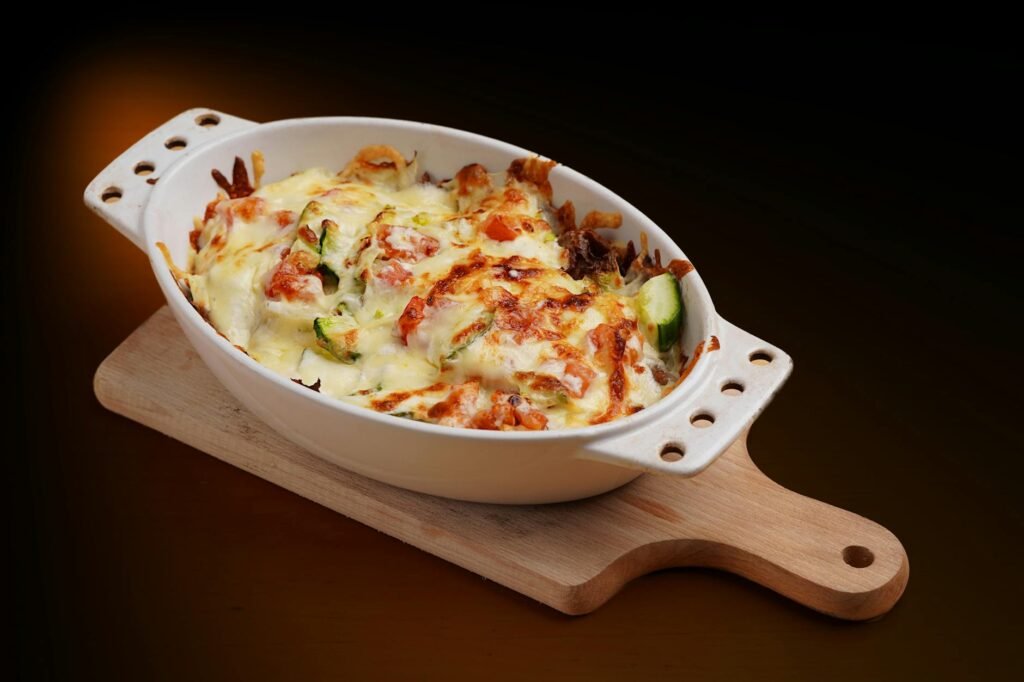
A household example: same dinner, less drag, less waste
Here is a realistic weeknight example with illustrative grocery math for four people. Version one: 12 ounces of egg noodles, 2 cans of condensed cream soup, 2 cups of cheddar, 1 cup of sour cream, 2 cans of tuna, and 1 cup of peas. That pan costs about $13.89 using mid-range supermarket prices. It also scores 5 out of 6 on the Comfort-Without-Drag Scorecard. The noodles and soup create stacked density. The cheddar and sour cream stack richness again. The peas do not contribute enough lift, and there is no bright finish or crunchy top.
Now rework the same idea: 10 ounces of noodles, 1 can of soup, 1 cup of milk, 1/2 cup of broth, 1 cup of cheddar, the same tuna, 2 cups of peas plus celery and onion, a spoonful of Dijon, a little lemon juice, parsley, and a light breadcrumb topping. That version costs about $11.44 in the same illustrative cart. It scores 2 out of 6. It is still casserole food. It is still creamy. But it is cheaper, brighter, and more likely to be finished. If two portions of the first pan get thrown out after a few days, the heavier casserole was not the cheaper dinner after all.
Five changes that fix most casseroles
- Use one rich anchor, not three. When cooking with condensed soup as base sauce, you probably do not still need to use sour cream and cream cheese.
If you are looking for a large cheese profile, go with one cheese alone instead of adding multiple cream ingredients that all have similar textures.
- In a family sized casserole, the use of vegetables can take up roughly 25-40% (approximately 3-5 cups, depending on recipe) of the pan volume. Vegetables such as mushrooms, broccoli, peas, kale, roasted cauliflower, onions and green beans will also add to the variety of textures in addition to solving soft-density problem.
- Make sure your sauce isn’t too thick because the starch will continue to absorb liquid when baking and after. If you’re putting a thick dip into the casserole, it will be dense when cooked. You’ll want the mixture to fill the bottom of the dish before cooking, meaning you don’t want it to rest in cubes at the top after cooking. If you’re unsure if it’s too thick or you need to loosen it up a bit more, add just a little splash of milk or broth or tomato juice instead of adding more cheese.
- Increase the brightness of your dish intentionally using a tablespoon or two of lemon juice, sherry vinegar, Dijon mustard, tomato paste or chopped pickled peppers. These ingredients will help to make the entire dish less heavy without giving it an unwanted sour flavour. Similarly, if you add fresh herbs, they will help to brighten the dish but will do it without having a taste of their own. Adding fresh herbs will not add any fanciness to your casserole but will make it easier for your guests and family members to keep eating.
- At the top, create contrast – a thin layer with either breadcrumb, crushed crackers or toasted crumb mixture and a little butter or oil, will provide an alternate feeling when eating the soft inside of the dish. If you want to add cheese to the top, make it much thinner and quickly brown it at the end instead of baking a thick layer of cheese for the whole cooking period.
Another practical rule is how the amount served changes the experience. What feels heavy when served on a larger square dish, such as a casserole dish, can taste perfectly right when served as a smaller portion, along with a crisp salad or coleslaw, depending on the type of dressing you use. If you really love the richness of a classic recipe, you may not have to completely recreate it from the ground up, but possibly can transform it into a dish with more of an all-around flavour profile by not having it served as a single meal.
If you rely on canned soups, broths, cured meats, and cheese in the same pan, compare Nutrition Facts labels rather than assuming one brand is automatically lighter. CDC guidance on label reading and Nutrition.gov’s sodium guidance both point readers toward labels as the practical way to compare products, and processed foods are a major sodium source. (cdc.gov)
Common mistakes that make casseroles feel leaden
- Using cheese as seasoning, structure, and topping all at once. That often creates grease and rubber rather than comfort.
- Cooking the pasta or rice all the way before baking. The oven is a second round of cooking, so fully cooked starch often turns soft and pasty.
- Adding high-water vegetables raw. Zucchini, mushrooms, spinach, and onions can flood the pan if they are not cooked down first.
- Treating blandness as a richness problem. Dull casseroles usually need acid, browning, herbs, or better seasoning discipline, not extra dairy.
- Ignoring the top. A uniformly soft surface makes the whole dish feel heavier even when the ingredients are reasonable.
- Tasting only when the pan is piping hot. Fat, salt, and starch all feel more balanced at high heat than they do after the dish sits for a few minutes.
When the first fix still is not enough
There are some types of casseroles that are meant to be heavy. You aren’t trying to accomplish a light dish with baked macaroni and cheese, funeral potatoes, or many of the holiday side dishes. Instead of heavy, your goal should be rich in moderation. Offer the dish in a small amount, serve the dish with either a green vegetable or something that will provide a contrast or cleansing effect to your palate, and don’t plan to use the casserole for everything you would like to have on the plate.
Casseroles that you want to freeze can be more challenging than others. Some types of ingredients that contain a large amount of water will begin to break down when frozen and thawed. Therefore, you cannot always say to just ‘add more vegetables’ as an option. Your second choice will be to try to use sturdier types of vegetables, to heat moisture from your casserole before putting it together, or to freeze your casserole assembly (filling and topping) separately if it’s possible to do so. If your family is particularly fond of creamy types of casseroles, you don’t want to take out all of the richness at one time. Instead, you should first add things that are bright and crunchy. The next time they eat a casserole, take out one of the dairy components. Taking this gradual approach generally results in a greater chance of acceptance than making a huge change in texture.
How to pressure-test your casserole before you commit the whole pan
- Taste the base before it goes into the dish. It should taste slightly brighter and more seasoned than you want the final casserole to taste, because starch will mute it.
- Take a look at how thick the batter is by pulling a spoon across the mix in the bowl. If the line creates a nice, steady line like potato fauxtatoes then add some water; if you see the line disappear very quickly (like a soup), you’re using too much liquid or need to add some amount of starch to it.
- You may also try using a ramekin to determine how thick the sauce will be and/or how much cheese should be used, by baking a half cup sample to get a sense of how thick or cheesy the sauce is before cooking a full pan of food.
- Allow casserole to cool for a minimum of 10-15 minutes after cooking, taste test both a center and edge piece of the casserole; evaluate centers for moisture level, edges for texture variation from top to bottom.
- Find purpose in evaluating what was left over. If you find that when you heat a portion back up it needs a little broth, a squeeze of lemon or some kind of crunchy garnish to bring it back to life, make a note of that and include it in the recipe when you make it again so that it won’t be just a one-time incident.
Food safety matters with casseroles because they are often made ahead and reheated. USDA, FDA, and CDC guidance says to refrigerate perishable leftovers within 2 hours, cool them in shallow containers, keep the refrigerator at 40°F or below, use leftovers within 3 to 4 days, and reheat casseroles and other leftovers to 165°F. (cdc.gov)
Bottom line
If you find that your casserole tastes heavy instead of comforting, the solution usually involves stacking fewer dense elements in your casserole dish. After you’ve stacked the elements in your dish, you can add back in the elements of comfort foods that make them feel like they are alive (vegetables, brightness, texture, and restraint). If you want to make a casserole feel generous instead of exhausting, it will be a lot easier to fix if you are scoring your ingredients prior to putting your casserole in the oven.
FAQ
Can I use condensed soup without making the casserole heavy?
Having said that, you shouldn’t use condensed soups as a single source of richness but rather as part of your overall strategy for incorporating richness.
To achieve this, you can thin condensed soups with milk or broth, add plenty of vegetables to the condiment, and incorporate acidity or herbs as appropriate.
Most often, the heavy consistency that such soups exhibit is due to layering on too much richness in the form of sour cream, cream cheese and a thick cheese layer as a topping.
Why does more cheese often make a casserole worse instead of better?
The addition of extra cheese will not contribute complexity to the dish faster than the addition of fat, salt, and thickness will. In fact, the addition of extra cheese to a dish that is already flat will typically cause it to become greasier and more rubbery while maintaining the flavor of the dish. However, increasing the brightness of the dish, adding a browning effect, and adjusting the consistency of the sauce would usually be a more effective way to correct the actual issue.
Why do casseroles often taste heavier the next day?
Leftovers are typically denser than the first serving of a dish due to starch absorbing liquid over time and fat setting once cooled. Rewarm in broth or milk or add an herb like lemon to finish the dish before serving.
Which vegetables help lighten a casserole without making it watery?
Peas, broccoli, kale, roasted cauliflower, green beans and mushroom will give you contrasting textures and volume without the risk of creating a watery mixture. If you are going to use spinach, zucchini or onion be sure to cook out the moisture before adding to your recipe.
What is the best fix when dinner is already baked and too rich?
To salvage this dish, do not try adding extra cheese or further baking to fix it. Instead, offer smaller portions of the item along with either a sharp salad/ vinegar-based vegetable; as well as brightening each dish with lemon, hot sauce, mustard, fresh herbs; and/or pickled garnishes. If you happen to have leftovers from this dish, you should add a small amount of liquid before re-heating to loosen up the portion.
How do I know whether the casserole is balanced before it goes into the oven?
Use the Comfort-Without-Drag Scorecard to determine whether your base is warm enough to work well. To do this, take a small spoonful of the base and place it in your mouth, making sure it has the right temperature. If you find that the base has a pasty, greasy, or dull taste on the spoon, there is nothing you can do in the oven to correct it. The fastest way to catch the problem is by doing a small ramekin test before you spend the time making a full pan of base.
References
- USDA FSIS: Leftovers and Food Safety – https://www.fsis.usda.gov/food-safety/safe-food-handling-and-preparation/food-safety-basics/leftovers-and-food-safety
- USDA FSIS: Safe Minimum Internal Temperature Chart – https://www.fsis.usda.gov/food-safety/safe-food-handling-and-preparation/food-safety-basics/safe-temperature-chart
- FoodSafety.gov: Safe Minimum Internal Temperatures – https://www.foodsafety.gov/food-safety-charts/safe-minimum-internal-temperatures
- CDC: Preventing Food Poisoning – https://www.cdc.gov/food-safety/prevention/
- CDC: Nutrition Facts Label and Your Health – https://www.cdc.gov/healthy-weight-growth/healthy-eating/nutrition-label.html
- Nutrition.gov: Salt and Sodium – https://www.nutrition.gov/topics/whats-food/salt-and-sodium
- FDA: Refrigerator Thermometers – Cold Facts about Food Safety – https://www.fda.gov/food/buy-store-serve-safe-food/refrigerator-thermometers-cold-facts-about-food-safety