
When cookies spread too much, the problem usually is not mysterious. In most home kitchens, it comes down to timing: the fat melts and the dough starts flowing before the cookie has enough structure to hold its shape. Too-warm butter, too much sugar or liquid, inaccurate flour measurement, hot sheet pans, and oven temperatures that run off target can all push the dough in the same direction. (kingarthurbaking.com)
It has to do with more than just how they look. If you have a bad batch, you have wasted butter, chocolate, eggs, time cleaning up, and time in the oven. Rather than asking yourself “Why did this batch of cookies turn against me?” you need to ask yourself “What was the first variable that changed?” Once you figure this out, the next batch will most likely be much better off than the first.
TL;DR
- Most overspread cookies fail before they set: the fat melts and the dough flows outward too fast. (kingarthurbaking.com)
- Start with the controllables: accurate flour measurement, cool-pliable butter, chilled dough when needed, cool sheet pans, and verified oven heat. (kingarthurbaking.com)
- Bake one or two test cookies before committing the whole tray. If they still run, chill the dough and, if needed, adjust with 1 tablespoon of flour at a time, up to 2 tablespoons. (kingarthurbaking.com)
What cookie spread actually means
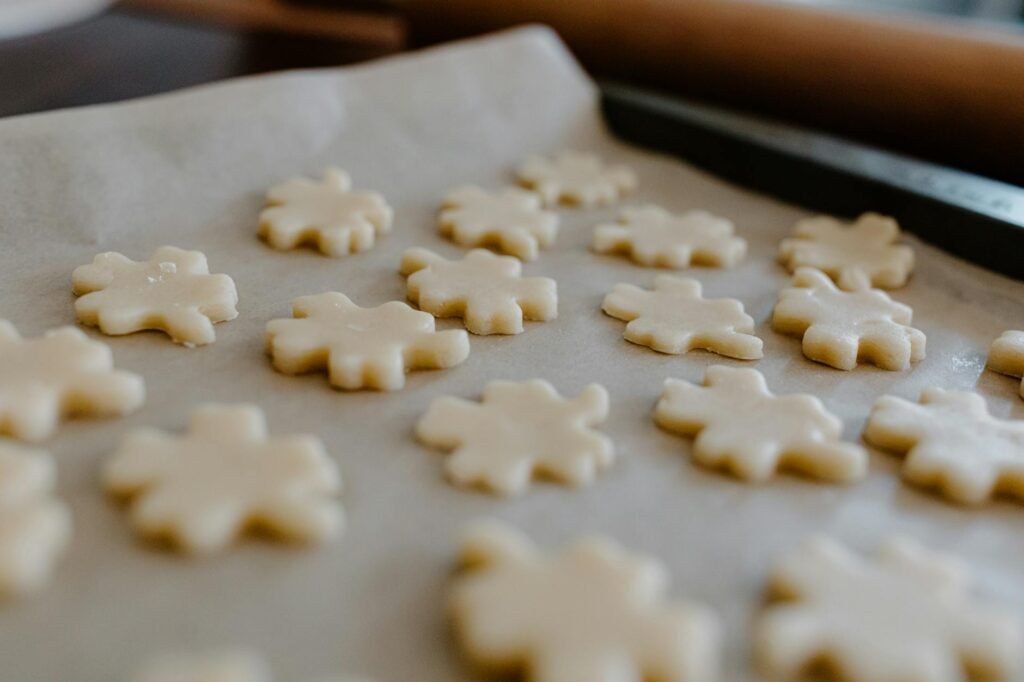
Think of cookie spread as a race. The dough softens, the sugar liquefies, the fat melts, and the flour-and-egg structure begins to set. If the melting and loosening happen faster than the setting, the cookie keeps moving outward. That is why very different mistakes can produce the same flat result. A hot pan, a loose dough, and overly warm butter all affect the same race, just from different directions. (kingarthurbaking.com)
One detail that trips people up: “room temperature” butter should still feel cool. King Arthur’s guidance is essentially that it should indent when pressed but still offer some resistance, not feel shiny, greasy, or warm. Once butter gets past that point, you are no longer making a classic creamed-cookie dough. You are drifting toward a dough that behaves more like one made with melted fat. (kingarthurbaking.com)
Run the SPREAD Audit before you change the whole recipe
Use this six-part triage before you start rewriting a recipe that may be mostly fine. The SPREAD Audit is a simple way to isolate the problem in the order most likely to matter.
- S – Soft fat: Was the butter truly softened, or was it warm and greasy? If the dough feels slick or the kitchen is warm, chill the dough before baking. Chilling helps the fat stay solid longer and slows spread. (kingarthurbaking.com)
- P – Proportions: Too much sugar or liquid, or too little flour, makes dough looser. Weighing flour is the most accurate method; if you are using cups, spoon and level instead of scooping straight from the bag. (kingarthurbaking.com)
- R – Real oven heat: An oven set to 350°F is not always baking at 350°F. Use an oven thermometer to verify actual heat because incorrect oven temperature is a known cause of cookie defects, including excess spread. (fsis.usda.gov)
- E – Equipment and sheet condition: A hot sheet pan starts melting dough before the oven even has a chance to work. Greased pans can encourage spread, foil can make cookies thinner, and parchment is a strong default. Silicone mats can reduce spread even more. (kingarthurbaking.com)
- A – Added moisture: Larger eggs than the recipe expects, or spreadable butter substitutes and tub margarines, can loosen dough because of added moisture or different fat behavior. (kingarthurbaking.com)
- D – Dough rest: If the recipe says chill, do it. If it does not, but the dough seems soft, give it a 30- to 60-minute rest anyway and test again. (kingarthurbaking.com)
Start with S and P before you change sugar levels or swap fats. Warm butter and inaccurate flour are common, fixable problems that can look like a “bad recipe” problem.
A quick diagnosis table
| What you see | Most likely cause | Best next change | Can this batch be saved? |
|---|---|---|---|
| Cookies merge together | Dough too warm, hot sheet pan, or loose ratios. (extension.usu.edu) | Chill the dough 30 to 60 minutes, cool the sheet completely, and line with parchment or silicone. (kingarthurbaking.com) | Usually yes. Bake one test cookie before loading the tray. (kingarthurbaking.com) |
| First tray looks okay, second tray spreads more | You reused a hot sheet pan. (kingarthurbaking.com) | Cool the pan fully between batches or rotate between two pans. (kingarthurbaking.com) | Yes. |
| Thin cookies with greasy or lacy edges | Butter too warm, pan greased, or foil changed how the dough baked. (kingarthurbaking.com) | Use a cool parchment-lined or ungreased sheet, not a greased or foil-lined one. (kingarthurbaking.com) | Sometimes. Chill first, then retest. |
| Cookies are flat and taste a little dull | Ratios may be off, or leavening may be old or moisture-damaged. (kingarthurbaking.com) | Weigh ingredients next time and replace old baking soda or baking powder if storage has been questionable. (kingarthurbaking.com) | Maybe. Test one cookie after chilling. |
| Spread got worse after using tub spread or a butter substitute | Different fat and water content changed the dough. (extension.illinois.edu) | Use stick butter or a recipe built for that product next time. (extension.illinois.edu) | Not reliably. |
A batch reset with real numbers
Consider a standard drop cookie dough that has been divvied into 24, approximately 2 Tbsp each. The kitchen temperature is 78°F. The butter has been softened in the microwave just until one side is shiny. The first pan goes on parchment paper and the cookies spread 3 3/4-inches wide, rather than 3-inches, as the recipe specified. The second pan is placed on the hot sheet and also spreads more than expected.
The reset is small, not dramatic. Chill the remaining dough for 45 minutes. Put fresh parchment on a fully cool sheet. Bake two test cookies. If they still run, add 1 tablespoon of flour to the remaining dough, mix just until combined, and test again. Utah State guidance specifically suggests adding 1 to 2 tablespoons of all-purpose flour when a test cookie spreads too much. As a practical rule, stop there; if 2 tablespoons and chilling do not fix the batch, switch to bars or a skillet cookie instead of forcing a dry, overcorrected dough. (extension.usu.edu)

What to change next time
- Measure flour with a digital scale if you can. If not, spoon flour into the cup and level it off instead of digging the cup into the bag. (kingarthurbaking.com)
- Soften butter correctly. It should bend and mix easily, but it should not look oily or feel warm. (kingarthurbaking.com)
- Use the egg size the recipe expects. Even one larger egg can add enough extra moisture to loosen cookie dough. (kingarthurbaking.com)
- Scoop evenly so the cookies spread at the same rate. A cookie scoop helps with consistency. (extension.illinois.edu)
- Bake only on cool sheet pans. If you are making multiple trays, rotate between pans or let the used one cool completely. (kingarthurbaking.com)
- Line thoughtfully. Parchment is a safe default. If you want slightly thicker cookies, a silicone mat can reduce spread more than foil or a greased sheet. (kingarthurbaking.com)
- If the dough feels soft or the kitchen is warm, chill the scooped dough before baking. (kingarthurbaking.com)
- Bake one or two test cookies before you bake the full tray. Change one variable at a time so you know what actually worked. (kingarthurbaking.com)
If this problem happens often, the two best control tools are simple: a scale for more accurate flour measurement and an oven thermometer for real oven temperature. They help solve repeat problems, not just one batch. (kingarthurbaking.com)
Common mistakes that flatten a tray fast
- Microwaving butter until part of it liquefies, then treating it as standard softened butter. (kingarthurbaking.com)
- Scooping flour directly from the bag and accidentally changing the dough ratios from one batch to the next. (kingarthurbaking.com)
- Loading dough onto a hot sheet pan between batches. (kingarthurbaking.com)
- Greasing the pan for a cookie recipe that already contains enough fat. (kingarthurbaking.com)
- Using foil when you want thick, chewy cookies. Foil baked much flatter in King Arthur’s side-by-side test. (kingarthurbaking.com)
- Using a tub spread or butter substitute and expecting the same structure as stick butter. (extension.illinois.edu)
- Changing three things at once, then not knowing which fix mattered.
When the easy fix is not enough
Sometimes the recipe is doing exactly what it was built to do. Formulas with more butter, more sugar, melted or very soft fat, or a thinner-cookie style will naturally spread more than formulas that use colder fat or part shortening. In those cases, the better choice may be to use a thicker-cookie recipe next time rather than fight a dough that is supposed to bake thinner. (kingarthurbaking.com)
You may have a backup plan if your dough has been mixed and it doesn’t tighten after refrigeration or flour-y adjustment. One way you can safely use this mix is to bake it as cookie bar food or as skillet cookie food. This is not considered as an absolute baking rule but generally allows all flavor to be kept, all of the ingredients saved and allows to get everyone’s dessert out without more time lost on finding the answers.
Do not keep adding flour blindly until the dough finally stands up. A small correction after a test cookie can help, but repeated flour additions can create a different problem than the one you started with. Utah State’s 1- to 2-tablespoon adjustment is a sensible ceiling for most home bakers. (extension.usu.edu)
How to pressure-test your fix
A successful cookie fix should be able to be proven, not just hoped for. Doing a mini controlled bake (same amount of dough per cookie; same amount of space between cookies; same position in oven) is a way to determine which factor was the real cause of the fix (chilling the dough, using different flour, using a different pan, or changing the temperature of the oven).
- Put an oven thermometer on the center rack and confirm actual oven heat before testing. (fsis.usda.gov)
- Bake two test cookies, not the full tray. (kingarthurbaking.com)
- Measure the baked diameter and note the edge texture. A cookie that is 0.5 to 0.75 inch wider than your target is still telling you something useful.
- Write down the butter state, chill time, pan lining, and bake time. Utah State Extension explicitly notes that ovens vary, so your notes matter. (extension.usu.edu)
- If the result improves, keep that change and stop. If not, move to the next letter in the SPREAD Audit instead of guessing.
The cheapest fix is still a two-cookie test
The most budget-friendly habit in this whole process is not fancy equipment. It is restraint. King Arthur recommends baking a few test cookies first, and Utah State offers the same practical idea. Catching the problem on cookie number one is better than discovering it after the entire tray has fused into one thin sheet. (kingarthurbaking.com)
Bottom line
Most cookies spread too much for ordinary reasons: butter got too warm, flour was measured loosely, the pan was hot or greased, the oven was off, or the dough needed a chill. Fix those variables before you blame the recipe. And if a minor flour adjustment plus chilling still does not solve it, stop forcing the dough and use a smarter backup like bars, a skillet cookie, or a different recipe next time. (kingarthurbaking.com)
Frequently asked questions
Should I add more flour if my first tray spreads too much?
Yes, but only after a test cookie confirms the problem. Utah State Extension suggests adding 1 to 2 tablespoons of all-purpose flour if a test cookie spreads too much. Make one small adjustment, then retest. (extension.usu.edu)
Why do my second-batch cookies spread more than the first batch?
The most common reason is a hot sheet pan. Warm metal starts softening the dough immediately, so the second tray gets a head start on spreading. Cool the pan completely between batches. (kingarthurbaking.com)
Does parchment paper or a silicone mat really make a difference?
Yes. King Arthur’s side-by-side testing found that foil led to the most spread, parchment was a solid all-purpose choice, and a silicone mat reduced spread more and produced thicker cookies. (kingarthurbaking.com)
Can chilling fix any cookie dough?
Chilling helps when the dough or fat is too warm, and it is often enough to improve shape. But it will not fully fix a dough with significantly off ratios or a fat substitution that changed the formula. (kingarthurbaking.com)
Do I really need a scale for cookies?
If you bake often, it is one of the most useful tools you can own. King Arthur’s baking guidance says a digital scale is the most accurate way to measure flour, which makes cookie results more consistent from batch to batch. (kingarthurbaking.com)
Could old baking soda or baking powder be part of the problem?
It can be. Utah State notes that baking soda and baking powder can chemically change with moisture over time, and King Arthur notes that out-of-date leaveners can contribute to cookie spread problems. If your leaveners are old or stored in a humid pantry, replacing them is a reasonable check. (extension.usu.edu)
References
- King Arthur Baking: Why are my cookies spreading? – https://www.kingarthurbaking.com/blog/2023/12/19/why-are-my-cookies-spreading
- King Arthur Baking: How To Measure Flour – https://www.kingarthurbaking.com/learn/how-to-measure-flour.html
- King Arthur Baking: Cookies spreading? It might be your pan lining. – https://www.kingarthurbaking.com/blog/2022/12/01/keep-cookies-from-spreading
- King Arthur Baking: Why I always bake a few test cookies first – https://www.kingarthurbaking.com/blog/2021/09/14/why-i-always-bake-a-few-test-cookies-first
- USDA FSIS: Appliance Thermometers – https://www.fsis.usda.gov/food-safety/safe-food-handling-and-preparation/food-safety-basics/appliance-thermometers
- Illinois Extension: Baking Cookies for Exhibit – https://extension.illinois.edu/blogs/be-smart-eat-well-get-healthy/2018-07-13-baking-cookies-exhibit
- Illinois Extension: Functions of fats in the kitchen – https://extension.illinois.edu/blogs/live-well-eat-well/2023-03-10-functions-fats-kitchen
- Utah State University Extension: Wasatch County Cooking Class, December 2020 – https://extension.usu.edu/wasatch/files/Christmascookies.pdf
- Utah State University Extension: Utah 4-H Fair Judges’ Manual – https://extension.usu.edu/utah4h/files/fair-judging-manual.pdf
- Utah State University Extension: Cooking Food Storage – https://extension.usu.edu/preserve-the-harvest/research/cooking-food-storage