
A good brunch board should feel generous, not like a grocery receipt arranged on a cutting board. The reason home hosts overspend is usually not one fancy ingredient. It is the pileup of small premiums: bakery pastries, pre-cut fruit, multiple cheeses, flavored spreads, and a backup protein that nobody actually needed. A cheaper approach is not to make the board smaller or sadder. It is to give every item a job: fill people up, add color, add texture, or serve as the one splurge. Starting with a list and checking what you already have before shopping is one of the simplest ways to cut cost and waste. (myplate.gov)
TL;DR
- Use the 70-20-10 Board Budget Rule: spend about 70% on filling basics, 20% on contrast and texture, and 10% on one premium cue.
- Bagels, eggs, yogurt, whole fruit, and block cheese usually beat pre-cut trays, mini pastries, and individual cups on value.
- A board looks expensive when it is dense, color-balanced, and edited. It does not need eight categories.
- Refill in small waves instead of setting every perishable item out at once.
- If the board includes eggs, dairy, fish, or cut produce, keep cold items cold and follow the FDA two-hour rule, or one hour when the temperature is above 90°F. (fda.gov)
Why brunch boards get expensive without looking better
The biggest leak is over-variety. Once you buy bagels, croissants, berries, pineapple, two cheeses, cream cheese, jam, smoked salmon, yogurt cups, and a pastry box, the board looks abundant, but the cost comes from duplication. You are paying for convenience, packaging, and categories that overlap. MyPlate recommends comparing unit prices, buying produce in season when possible, and using practical low-cost proteins such as eggs. Those habits matter more here than chasing a “fancy” shopping list. (myplate.gov)
- Buying three cheeses when one cheese and one spread would do the same job.
- Using both pastries and bagels, even though guests usually commit to one main carb.
- Paying for pre-cut fruit when whole strawberries, grapes, or orange wedges create the same color for less.
- Adding two premium proteins, such as smoked salmon and prosciutto, instead of choosing one.
- Putting everything out at once, which makes slow brunches much more wasteful.
Use the 70-20-10 Board Budget Rule
Here is the article’s working tool: the 70-20-10 Board Budget Rule. About 70% of your budget goes to foods that create volume and keep people full. About 20% goes to contrast, crunch, and flavor. The last 10% goes to one premium cue that makes the board feel like brunch instead of an ordinary breakfast plate. For most grocery trips, the value-heavy bucket is bread or bagels, eggs, yogurt or cream cheese, and fruit. MyPlate specifically points shoppers toward unit-price checks, seasonal produce, and eggs as a low-cost protein option. (myplate.gov)
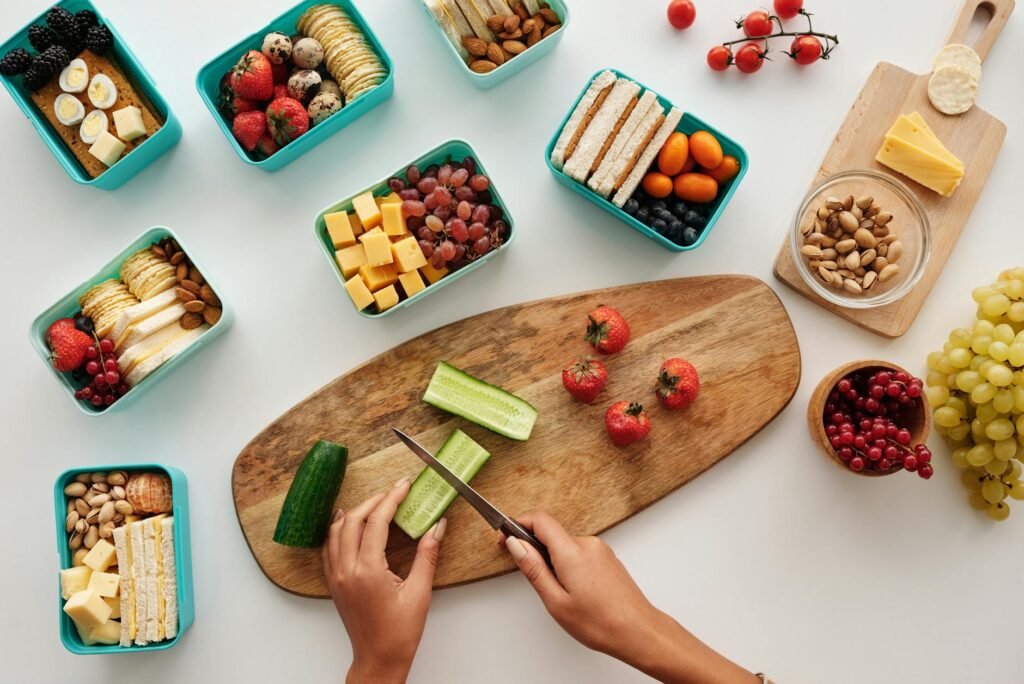
In order to make this board work in your store, simply divide it into four foundations, three fresh products, two accent pieces, and one splurge. The four foundations are a starch, protein, a creamy spread & fruit. The three fresh products should be one type of berry/grape, crisp vegetable & citrus/herb. You could use cheese, jam, granola, nuts or olives as accents. The splurge items consist of smoked salmon, bakery croissants, great local honey, or a higher quality jam. If you have multiple true splurge items in your cart, the board may be out-of-budget.
| Board job | Best value picks | Looks upscale without much extra cost | Usually skip for a simple budget board |
|---|---|---|---|
| Base / starch | Bagels, toast points, English muffins | One small bakery item as the only pastry | Bagels plus croissants plus waffles |
| Protein | Hard-boiled eggs, deviled eggs, turkey sausage links | One small pack of smoked salmon as the only splurge | Multiple premium proteins on one board |
| Creamy element | Plain Greek yogurt dip, whipped cream cheese | A small bowl of honey or one better jam | Several flavored tubs or individual yogurt cups |
| Color / freshness | Whole strawberries, grapes, orange wedges, cucumber | Fresh herbs or one seasonal berry | Large pre-cut fruit trays |
| Crunch / finish | Granola, nuts, seeded crackers | Toasted nuts in a small bowl | Three cracker varieties doing the same job |
What actually makes a board look expensive
The illusion is one of density, not luxury. Repetition appears deliberate. Large open spaces appear unfilled. A board looks polished when colours repeat, bowls are small enough, and foods grouped tightly enough so that one item falls against another. That means you do not need five fruits. Two fruits in a larger cluster look fuller. You do not need three breads. One bread, sliced and staggered, looks intentional. You do not need a mountain of smoked salmon. A small folded corner of salmon, next to cucumbers and dill, suggests “special” because it is framed well. Even the cut matters. Halved strawberries, orange wedges, cucumber ribbons, and egg halves create variety from irrefutably everyday groceries.
A $40.69 board for six: a realistic grocery run
Imagine two adults hosting four friends for a late Saturday brunch. They want one board, coffee, and no second grocery stop. Their food cap is $45 before drinks. Instead of building a mini charcuterie spread with breakfast items piled on top, they use the formula and buy only one premium cue. Prices below are sample mid-range US supermarket prices, not national averages, but they show how the math works.
- 6 plain bagels: $4.99
- 1 dozen eggs: $3.49
- 24-ounce plain Greek yogurt: $4.99
- 8-ounce whipped cream cheese: $3.29
- 1 pound strawberries: $3.99
- 1 pound red grapes: $2.99
- 1 cucumber: $1.19
- 8-ounce cheddar block: $3.49
- 1 jar jam: $3.99
- 4-ounce smoked salmon: $6.99
- 1 bunch dill: $1.29
- Honey, salt, pepper, paprika from the pantry: $0 marginal cost
Total food cost: $40.69, or about $6.78 per person. On the board, the bagels are halved and fanned, the eggs are halved with paprika, the yogurt becomes a honey dip, the cream cheese goes in a small bowl, the strawberries and grapes create the color, the cucumber and cheddar add savory balance, and the salmon gets one compact corner with dill. It looks fuller than the receipt suggests because the basics carry the volume. If smoked salmon is not worth it for your crowd, replacing it with another fruit and a second batch of eggs could bring the board close to the low-$30s without making it feel stripped down.
How to shop and build it without overbuying
- Set the budget before the menu. For a board that replaces breakfast, a practical starting range is often about $5 to $8 per adult, depending on your store, season, and whether drinks are separate.
- Check the fridge, freezer, and pantry first. MyPlate recommends seeing what you already have and building the list from there. Jam, honey, nuts, granola, and frozen berries can save a whole extra purchase. (myplate.gov)
- Choose one carb and commit. Bagels, toast points, English muffins, or a small pastry tray. Not all four.
- Buy whole produce when appearance will survive the cut. MyPlate notes that in-season produce often costs less, and unit-price comparisons can reveal better buys across similar items. Whole strawberries, grapes, and orange wedges usually beat pre-cut fruit on value for a board. (myplate.gov)
- Turn one plain item into a custom spread. Plain Greek yogurt with honey, or whipped cream cheese with chives, is usually cheaper than buying several flavored tubs.
- Plate tightly. Use small bowls, overlap slices, and repeat colors. A crowded 14-inch board looks fuller than a sparse 20-inch tray.
- Refill small amounts from the fridge. FDA guidance says perishables should not sit out too long, so keep backup eggs, dairy, and fish chilled until needed. (fda.gov)
Where the formula starts to fail, and what to do instead
This formula works best for about four to eight people and a brunch window of roughly an hour. It gets weaker when you are feeding big eaters, serving outdoors, or covering multiple dietary needs with one board. In those cases, do not solve the problem by adding more premium nibbles. Add one low-cost hot anchor instead, such as sheet-pan potatoes, baked oatmeal squares, or a breakfast casserole on the side. If you need vegetarian, gluten-free, or nut-free options, make separate mini-zones or a second small tray instead of crowding the main board with substitutes. For outdoor service or long grazing windows, keep egg, dairy, fish, and cut produce in the refrigerator or over ice and replenish in smaller batches. FDA says perishables should be discarded after two hours at room temperature, or after one hour if the temperature is above 90°F. (fda.gov)
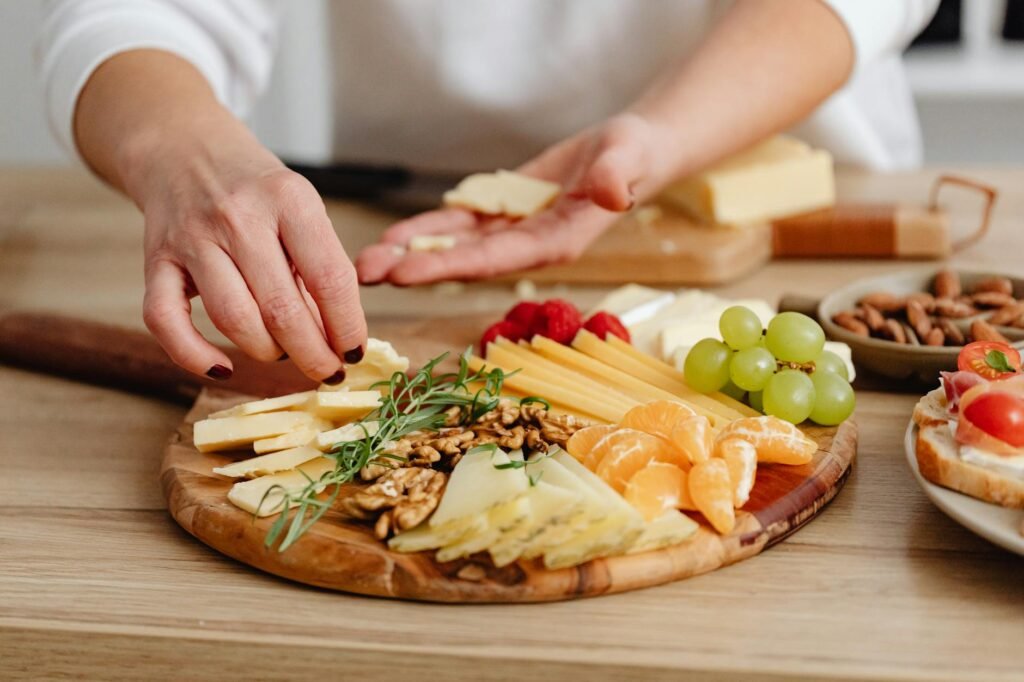
Warning: If you want hollandaise, aioli, or another sauce that may use raw or lightly cooked egg, use pasteurized eggs or choose a store-bought version. FDA recommends pasteurized eggs or egg products for recipes served raw or undercooked. (fda.gov)
Common mistakes that make a simple board feel costly
- Mistaking variety for value. More categories usually means more waste.
- Buying premium ingredients before buying enough base food.
- Using individual yogurts, jam jars, or fruit cups instead of one shared bowl or cluster.
- Picking two showpiece items instead of one. Salmon and bakery pastries on the same board can wreck the budget fast.
- Forgetting the leftover plan. If nobody in your house will eat the extra item on Monday, buy less of it.
- Building too wide. A larger board often makes hosts buy more food just to fill the visual space.
How to pressure-test your board before checkout
Prior to purchasing, you should conduct an easy cart audit. Before your useful plan becomes an “it was only a couple extra things,” check to see if you have any of these three risks:
Duplicate categories
Weak leftovers
Safety risks
- Circle every item guests will actually fill up on. If fewer than three items qualify, the board is too decorative and not substantial enough.
- Highlight every item over $5. If more than two items are highlighted, cut the least important one.
- Ask the leftover question: can this become breakfast or lunch tomorrow? If not, shrink it.
- Check unit prices on duplicate categories. The cheaper bagel, yogurt, or berry option often looks identical once plated. (myplate.gov)
- Run the safety clock. If the board includes eggs, dairy, or fish, make sure you have refrigerator space and a refill plan so perishables are not sitting out past FDA guidance. (fda.gov)
Bottom line
The most affordable brunch board is not necessarily the least amount of food or smallest size; instead, it is an “editing board.” When you purchase a large enough quantity of starch, enough protein, sufficient variety & exactly one premium cue, it appears generous when served and not as a party platter bill. The $70/$20/$10 board budget rule also works well because it directs most money toward products that people will consume while keeping the special item as small but visible on the board.
Frequently asked questions
What is a reasonable per-person budget for a brunch board?
For a board that replaces breakfast, a practical planning range is often around $5 to $8 per adult before drinks. If you are also serving a hot casserole, potatoes, or pastries, you can usually plan closer to the low end because the board does not need to do all the work.
Should I spend on smoked salmon or a second cheese?
If you are looking for a more brunch type of board, you’ll want to use smoked salmon, while using none or just a single cheese if your crowd is more casual. The addition of a second cheese doesn’t add as much to the visual impact or the overall effect of one small premium piece of cheese.
Can I prep a brunch board the night before?
Yes, but prep the components more than the final board. Hard-boil the eggs, wash fruit, mix dips, and slice cheese the night before. Assemble close to serving time, keep the refrigerator at 40°F or below, and remember that FDA says perishable foods should not sit out for more than two hours. FDA also says hard-cooked eggs should be used within one week after cooking. (fda.gov)
What if I want hollandaise or another egg-based sauce?
Use pasteurized eggs or a store-bought option. FDA recommends pasteurized eggs or egg products for recipes that are served raw or undercooked, which is the safest move for sauces like hollandaise, aioli, or homemade mayonnaise. (fda.gov)
How do I make a brunch board safer for an outdoor shower or long gathering?
Keep the board mostly bread, fruit, and shelf-stable accents, then refill small amounts of eggs, dairy, and fish from a cooler or refrigerator. FDA guidance says perishables should be discarded after two hours at room temperature, or after one hour if it is above 90°F. (fda.gov)
What is the cheapest item that still makes a brunch board feel special?
For very little money, fresh dill and orange wedges combined with lovely adverts of nourishing jam or sweet honey dribbled on plain yogurt can provide a dramatic amount of visual impact. These types of accessories or accents add a lot of texture and finish along with some degree of contrast and purpose; however, the true budget base is still the bread, eggs, and fruit that form the foundation of the plate.
References
- FDA – Are You Storing Food Safely? – https://www.fda.gov/consumers/consumer-updates/are-you-storing-food-safely
- FDA – Serving Up Safe Buffets – https://www.fda.gov/food/buy-store-serve-safe-food/serving-safe-buffets
- FDA – Egg Safety: What You Need to Know – https://www.fda.gov/food/buy-store-serve-safe-food/egg-safety-what-you-need-know
- FDA – Dairy and Eggs (Food Safety for Moms-to-Be) – https://www.fda.gov/food/people-risk-foodborne-illness/dairy-and-eggs-food-safety-moms-be
- MyPlate – Shop Smart – https://www.myplate.gov/eathealthy/budget/budget-price-tag
- MyPlate – Make a Plan – https://www.myplate.gov/eathealthy/budget/budget-grocery-list?c=BH28E