
A packed lunch only saves money if you still want to eat it at noon. That sounds obvious, but a lot of lunch planning falls apart on texture, not effort. Bread absorbs moisture, lettuce collapses, cut fruit leaks, and the meal you meant to eat gets replaced by a $14 sandwich. The fix is not more elaborate meal prep. It is choosing lunches built for refrigeration, then packing them within a real food-safety window: keep the refrigerator at 40°F or below, chill perishables promptly, and plan to eat most cooked leftovers within 3 to 4 days. (fda.gov)
TL;DR
- The best fridge-friendly lunches use sturdy bases like grains, pasta, beans, roasted vegetables, and thick soups.
- Keep wet ingredients, crunchy toppings, and tender greens separate until lunch.
- If a lunch needs refrigeration, treat temperature as part of the recipe: a 40°F fridge, prompt chilling, and an insulated bag with cold sources if you will be away from a refrigerator. (fda.gov)
- A cheap lunch stops being cheap when you throw it out and buy takeout anyway.
- For higher-risk groups, cold deli meat deserves extra caution; reheating to 165°F or until steaming hot is the safer move. (cdc.gov)
Use the Fridge-Proof Lunch Filter
Before you prep a batch, run it through the Fridge-Proof Lunch Filter. A lunch passes only if it has a sturdy base, controlled moisture, a clear sauce plan, protected crunch, and a realistic storage window. That sounds simple because it is. It is also more useful than following a recipe that looks great on Sunday and disappoints on Tuesday. Store prepped food covered, keep the refrigerator at 40°F or below, and cap most cooked leftovers at 3 to 4 days. (fda.gov)
- Base test: Can the foundation handle moisture? Good bets are rice, farro, couscous, pasta, beans, roasted vegetables, thick soups, slaws, and wraps assembled later.
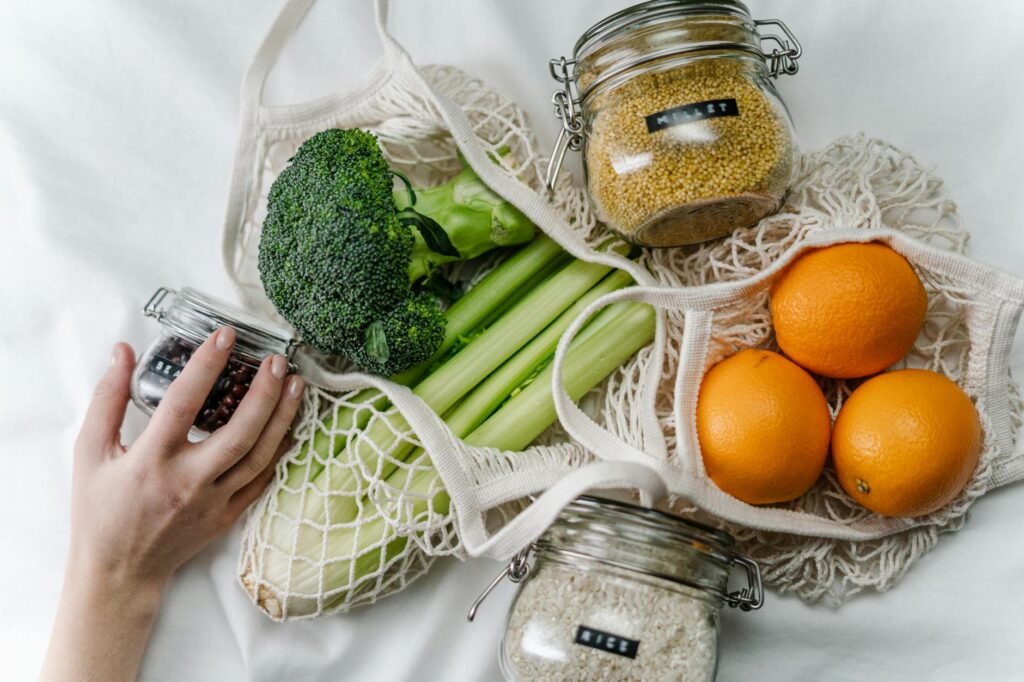
- Water test: Do tomatoes, cucumbers, oranges, pickles, or cut fruit need their own container? If yes, separate them.
- Sauce test: Thin vinaigrettes, salsa, and soy-heavy sauces usually belong on the side. Thicker dressings like pesto or yogurt-tahini often hold better.
- Crunch test: Nuts, seeds, crackers, tortilla strips, croutons, and fresh herbs keep better outside the main container until lunch.
- Safety test: If you will not eat it within 3 to 4 days, freeze part of the batch or prep less. Egg, chicken, tuna, and macaroni salads are also short-window lunches. (foodsafety.gov)
A practical rule: if a lunch fails two tests, do not meal-prep it. Eat it for dinner the night you make it instead.
Decision table: which lunch format fits your week?
| Lunch format | Why it stays fresh | Keep separate until lunch | Sample home cost |
|---|---|---|---|
| Roasted grain bowl | Sturdy ingredients absorb flavor overnight instead of going limp | Dressing, avocado, crunchy toppings | $3.25 – $4.25 |
| Pesto pasta salad | Tastes good cold and usually improves after a night in the fridge | Tender greens | $2.50 – $3.50 |
| Sesame noodle box | Sauce clings well and does not rely on bread texture | Cucumber, peanuts, herbs | $3.00 – $4.25 |
| Chickpea pita kit | Cheap, filling, and easy to portion | Pita or crackers | $2.25 – $3.00 |
| Soup plus snack side | Reheats well and avoids soggy-salad problems | Crackers, fruit, cheese | $2.50 – $4.00 |
| DIY snack plate | Flexible when you want variety instead of one container meal | Crackers and juicy produce | $2.75 – $4.00 |
Recognize the types of food that are not leading the way in the lunch table: sandwiches with delicious fillings that have been assembled for 4 days, and monster-sized salads that were prepped for 4 days before serving. These items are doable, but are not the easiest way to create a lunch that will be a verifiable alternative to takeout.
Six easy lunch ideas that actually hold up
1) Roasted vegetable grain bowl
Start with cooked grain, then add roasted broccoli or cauliflower, carrots, chickpeas or chicken, feta, and a lemony sauce in a small cup. Roasted vegetables shed less water than raw vegetables, and grains tend to get better as they sit because they absorb flavor instead of collapsing. This is the lunch to make when you want three dependable workdays, not a pretty meal-prep container that falls apart halfway through the week. Sample home cost: about $3.75 with beans and about $4.50 with chicken.
2) Pesto pasta salad with white beans
You can use short pasta with white beans, chopped bell peppers, chopped olives, and a few pieces of mozzarella cheese as the main ingredients for a pasta salad. Lightly coat all ingredients with pesto dressing. Pasta salads usually taste better after sitting in the refrigerator overnight because the flavors have time to develop; however, cold salads must be correctly seasoned prior to eating. Therefore, taste your pasta salad cold before packing it and adjust seasonings (salt, lemon, black pepper, etc.) so that it is seasoned properly for consumption. To keep your salad from becoming wilty, add arugula or spinach when you are ready to serve it, rather than on the first day.
3) Sesame noodle box with chicken or edamame
The viscosity of the dressing allows it to cling or adhere to the pasta instead of simply pooling on the bottom of a bowl. After tossing the noodles with either a peanut-sesame sauce or a soy-tahini sauce, toss in shredded chicken or edamame for protein. Be sure to pack your cucumbers, scallions, cilantro, and peanuts separately so that when you open them at lunchtime, they’ll have that added contrast. Eating a cold lunch will matter more than most people will admit when making their choice on a busy day. If you find that your preference for lunch is to eat food that does not need reheating, it will make it easier to choose a quick and easy meal during a busy lunch period.
4) Chickpea crunch pita kit
Mash chickpeas with yogurt or mayo, Dijon, celery, and herbs, then pack pita, crackers, or sturdy toast separately. It gives you the feel of a deli-style lunch without the deli markup, and it is forgiving if you do not measure much. Make the filling slightly punchier than you think it needs to be because cold foods dull flavor. FoodSafety.gov lists egg, chicken, tuna, and macaroni salads at 3 to 4 days in the refrigerator, so this is a short-prep-window lunch, not a full-week one. (foodsafety.gov)
5) Soup-and-snack combo
A cup of lentil soup, turkey chili, or vegetable soup plus crackers, fruit, and cheese is one of the cheapest lunches that still feels complete. Soup solves a lot of freshness problems because texture matters less in a broth or puree than it does in a salad. It is also a good backup when your appetite changes during the week. If you reheat leftovers, bring them to 165°F, and use shallow containers so hot food cools faster after cooking. (fsis.usda.gov)
6) DIY snack plate
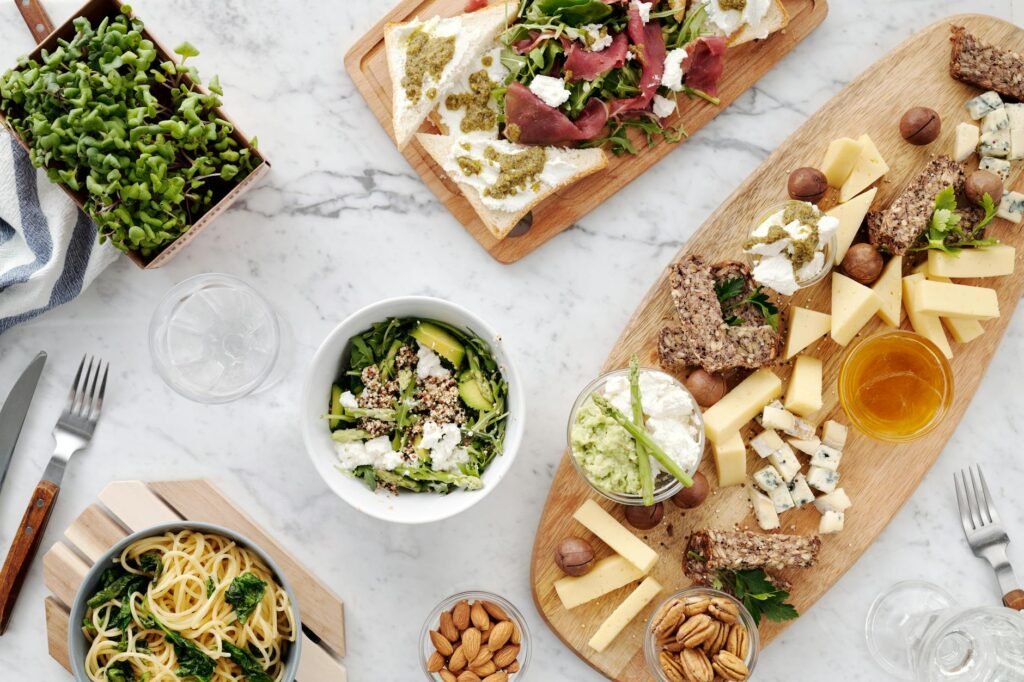
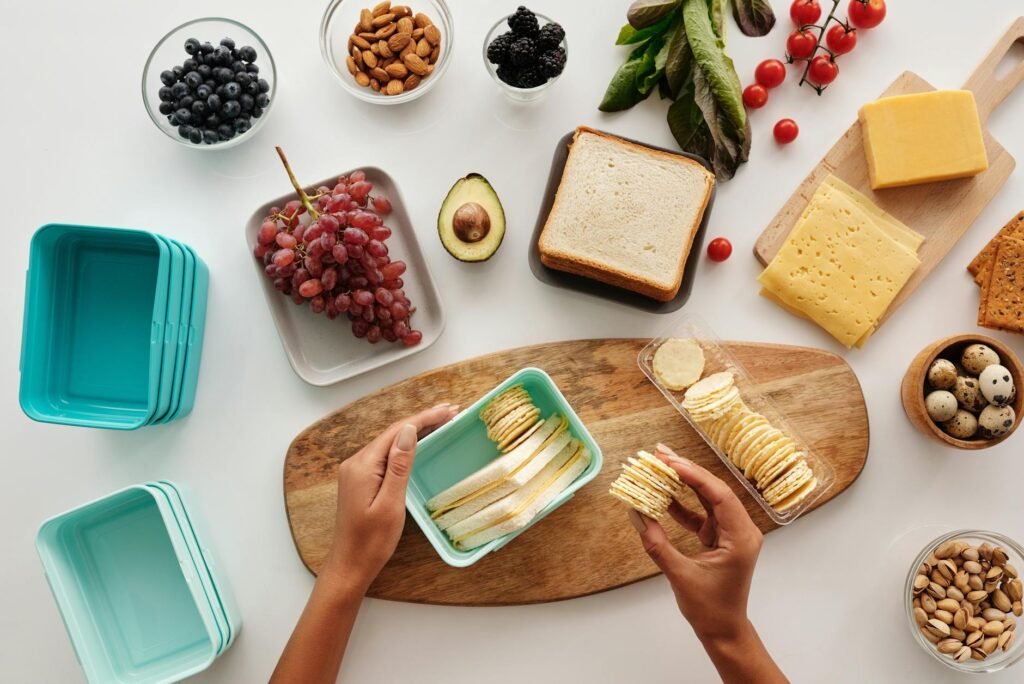
As opposed to a child’s lunch box, think of this as your own adult alternate lunch. Combine items such as cheese, grapes, sliced bell peppers, hard-boiled eggs, hummus, nuts, and/or crackers into one container. The main idea here is to have options. Using a “snack plate” allows you to be able to have different varieties of food on days when you feel like you would be bored with a single container meal without an alternative. You should only make two or three at a time in order to maintain the best appeal of the cut vegetables, and you should keep the crackers completely separated until you are ready to consume them.
A realistic workweek example with numbers
Suppose you usually buy lunch four times a week at $14 each after tax and bring leftovers once. That is $56. A home-prepped week built from two grain bowls, two sesame noodle boxes, and one chickpea pita kit might run about $17 to $20 in ingredient cost if you use store-brand staples and pantry condiments you already keep around. Even at $20, the weekly gap is about $36, or roughly $144 over four workweeks. The real savings, though, come from avoiding waste. A lunch you abandon in the office fridge is not a budget lunch.
Pack lunches so they still taste like lunch
- Cool and store food promptly. Refrigerate perishables within 2 hours, or within 1 hour if the temperature is above 90°F. Use shallow containers so hot food cools faster, and keep your refrigerator at 40°F or below. (fda.gov)
- Use the two-container method. Put the sturdy base in one container and anything juicy, crunchy, or leafy in a second one.
- Season for cold food. Chilled lunches usually need a little more acid, salt, and herbs than hot food because cold temperatures mute flavor.
- Pack whole fruit when you can. An apple, orange, or banana creates less moisture trouble than cut fruit.
- Save texture until noon. Add nuts, seeds, crackers, tortilla strips, croutons, and fresh herbs right before eating.
- If you will be away from a refrigerator, use an insulated lunch bag and at least two cold sources such as gel packs or frozen bottles. (usda.gov)
This article offers general food storage and lunch-packing information, not medical advice. If you are pregnant, age 65 or older, immunocompromised, or packing for someone who is, use extra caution with refrigerated deli meats and similar ready-to-eat foods. CDC advises higher-risk groups to avoid deli meat unless it is reheated to 165°F or until steaming hot. (cdc.gov)
Where this breaks down and what to do instead
Some weeks, even good lunch systems fail. If you do not have a reliable office fridge, shift from mayo-based salads and dairy-heavy boxes to shelf-stable components plus whole fruit, or bring an insulated lunch bag with cold packs. If you get bored by day three, prep two different bases instead of five identical lunches. If your refrigerator runs warm, fix that before you meal-prep; FDA and USDA both put the safe refrigerator target at 40°F or below. And if deli meat is your default shortcut, remember two limits: opened luncheon meat has a short refrigerator life, and higher-risk groups should avoid it cold unless it is reheated. (usda.gov)
Common mistakes that make lunch money leak away
- Building the sandwich the night before instead of packing a sandwich kit.
- Using watery vegetables as bulk rather than accent.
- Packing five lunches with one flavor profile, then getting bored and buying lunch on Wednesday.
- Storing crunchy toppings in the main container.
- Assuming a tote bag or backpack counts as refrigeration. Perishable foods still need temperature control. (usda.gov)
- Meal-prepping past the safe window instead of freezing extras. (fsis.usda.gov)
How to verify your own lunch lineup
In order to ensure you’re getting or giving lunch advice that will hold up to scrutiny, ask yourself if the food looked appealing at prep time. Instead, ask yourself if the food tasted good at mealtime 18-24 hours later. Completing a Thursday Fridge Audit will provide you with more valuable information than any other recipe list you could use. In other words, this audit will lead to a much greater reaction from your meal than any other list ever could.
- Prep one lunch exactly as planned and refrigerate it in the container you actually use.
- The next day, score it from 1 to 5 on texture, moisture, flavor, and whether you would choose it over buying lunch.
- If the score is low, change only one variable next time: sauce on the side, sturdier greens, whole fruit, fewer tomatoes, or crackers packed separately.
- Do not use this test to stretch food past the basic 3-to-4-day leftovers window. If you made too much, freeze part of the batch instead. (fsis.usda.gov)
Bottom line
The lowest-cost lunch in terms of ingredients isn’t the cheapest lunch overall. The most economical lunch is the one that stays fresh and edible when you take it out of your refrigerator for noon, and also saves you money from not having to buy an extra meal because your packed lunch turned mushy. When planning lunches that can be eaten after being refrigerated overnight, choose a format that will last in the container, divide wet and dry ingredients, and don’t make as many lunches as usual if it results in waste.
FAQ
What is the best bread for make-ahead lunches?
For overnight preparation of sandwiches made with durable types of bread (pita, tortillas, ciabatta, or toasted sandwich bread), these types of bread generally do hold up better than very soft sandwich breads. If the filling is especially moist in nature, try packing the bread and filling separately and assembling the sandwich at lunchtime.
Do mason jar salads really stay fresh?
Certainly, however, only in the following order: rustic vegetables & beans (middle), greens (top). They can be combined, however grain bowls & pasta salads are generally easier if you are primarily concerned with texture.
How long can chicken salad, tuna salad, or egg salad stay in the fridge for lunch prep?
FoodSafety.gov lists egg, chicken, tuna, and macaroni salads at 3 to 4 days in the refrigerator. That makes them fine for a short prep window, not a full week. (foodsafety.gov)
Is it safe to keep lunch in my backpack all morning?
Only if you are actively keeping perishable food cold. USDA recommends an insulated lunch bag with at least two cold sources. A plain paper bag or backpack pocket is not enough for perishable food if it sits out for hours. (usda.gov)
Which ingredients should almost always be added right before eating?
Crunchy toppings, fresh herbs, crackers, tortilla chips, avocado, cut cucumbers, tomatoes, and tender greens are the usual suspects. If an ingredient releases water or loses texture fast, keep it separate.
Are cold deli meat lunches a good weekly default?
For many healthy adults, short storage and good refrigeration matter most. But if you are pregnant, older, or immunocompromised, CDC advises avoiding deli meat unless it is reheated to 165°F or until steaming hot. (cdc.gov)
References
- FDA: Are You Storing Food Safely? – https://www.fda.gov/consumers/consumer-updates/are-you-storing-food-safely
- USDA FSIS: Leftovers and Food Safety – https://www.fsis.usda.gov/food-safety/safe-food-handling-and-preparation/food-safety-basics/leftovers-and-food-safety
- FoodSafety.gov: Cold Food Storage Chart – https://www.foodsafety.gov/food-safety-charts/cold-food-storage-charts
- USDA: Use an Insulated Lunch Bag to Keep Meals Safe – https://www.usda.gov/about-usda/news/blog/use-insulated-lunch-bag-keep-meals-safe
- CDC: Safer Food Choices for Pregnant Women – https://www.cdc.gov/food-safety/foods/pregnant-women.html
- FDA: Refrigerator Thermometers – Cold Facts about Food Safety – https://www.fda.gov/food/buy-store-serve-safe-food/refrigerator-thermometers-cold-facts-about-food-safety