
TL;DR
- Limp roasted vegetables are usually a moisture problem, not a seasoning problem. If the vegetables are wet, crowded, or cooking at the wrong actual oven temperature, they steam before they brown. (Strong4Life)
- The fastest upgrade is simple: wash, dry thoroughly, cut evenly, spread in one layer with space, and roast sturdier vegetables at about 425°F. (Strong4Life)
- Do not force soft and dense vegetables onto the same schedule. Strong4Life recommends starting denser vegetables first and adding softer ones later. (Strong4Life)
- Frozen vegetables can roast well, but they need a hotter setup and a preheated pan because they start with more moisture. (Strong4Life)
- If your method looks right but results are still inconsistent, check the oven with a thermometer. USDA notes that a consistent oven offset can be adjusted for once you verify it. (USDA)
Limp roasted vegetables are usually not underseasoned. They are under-dried, overcrowded, mistimed, or cooked in an oven that is not delivering the heat you think it is. Strong4Life’s roasting guide tells home cooks to dry vegetables thoroughly, leave space between pieces, and roast many vegetables at 425°F. Boston Medical Center similarly recommends equal-size cuts and an even layer without overlap. (Strong4Life)
While this may seem like it’s just scratching the surface of why roasted vegetables can sometimes fail spectacularly, it covers the majority of all failed roasts. When you put wet veggies on a crowded pan and they immediately start to steam, they will generate steam quicker than their container can get rid of it, resulting in a cloudy and watery product that doesn’t have the crispy edge we all want. Thus, if you’re after crispy edges, make sure to deal with the moisture created during cooking long before you start adding any extraneous ingredients (garlic, balsamic glaze, cheese, etc.) to your roasts!
The real reason roasting turns into steaming
Three things usually separate crisp roasted vegetables from limp ones: dry surfaces, open space, and enough heat. Strong4Life says excess moisture causes vegetables to steam instead of roast, and both Strong4Life and Boston Medical Center recommend a single layer with space or no overlap. USDA also notes that an oven thermometer can reveal whether your oven is running high or low, which matters more than many home cooks realize. (Strong4Life)
In plain English, if the tray is wet and crowded, the oven spends too much of the cook time drying the vegetables instead of browning them. That is why a vegetable can be fully tender but still disappointing. Tender is not the same as roasted well. Strong4Life defines doneness as golden brown plus fork-tender, which is a better target than softness alone. (Strong4Life)
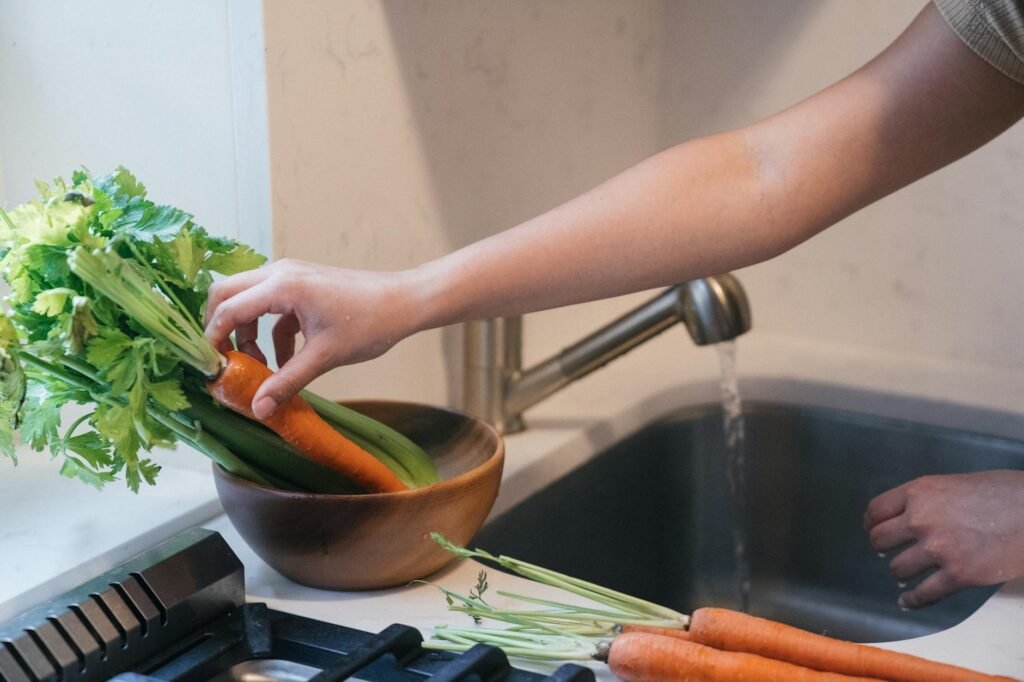
Use the CRISP Roasting Audit before you blame the recipe
You’ll be able to quickly identify the problem with a simplified diagnostic tool. The ZXRKEEP0000QXZ includes the following five parameters: Crowding, Residual water, Inconsistent size, Setting, and Produce match. If two of these parameters are not satisfied then the texture of your roast will typically be compromised. If three of these parameters aren’t satisfied, you will have stopped roasting and will now be fighting everything that has created steam.
| Check | What a pass looks like | What failure looks like | Fix for tonight |
|---|---|---|---|
| Crowding | Pieces sit in a single layer with visible space | Pieces touch everywhere, overlap, or pile up | Move half to a second pan |
| Residual water | Vegetables are dry to the touch before oiling | Water clings to the produce or pools in the bowl | Pat dry thoroughly with towels |
| Inconsistent size | Most pieces are close in thickness and width | Tiny pieces burn while big pieces stay dense | Re-cut or separate by size |
| Setting | Oven is truly hot and fully preheated | The dial says 425°F, but the oven behaves cool | Check with an oven thermometer and adjust |
| Produce match | Dense vegetables cook with dense vegetables; soft vegetables are staggered or separate | Carrots, broccoli, zucchini, and tomatoes all start together | Start dense vegetables first or roast separately |
Utilize the audit similar to a scorecard – a zero (or one) would imply that the batch may be repressed after the additional time finishes or if finished with high heat. Two will typically give you lower quality vegetables and three (or more) all but assure undercooked items despite being properly seasoned.
The five fixes that matter most
- Wash produce under running water, then dry it thoroughly before it hits the oil. FDA recommends washing fruits and vegetables before preparing them, and Strong4Life specifically warns that too much moisture makes vegetables steam instead of roast. (FDA)
- Cut pieces to roughly the same size. Mayo Clinic Press and Boston Medical Center both recommend equal-size pieces so vegetables cook more evenly. (Mayo Clinic Press)
- Use a sheet pan and keep the vegetables in one layer. Boston Medical Center says to avoid overlapping, and Strong4Life says to leave space in between. (Boston Medical Center)
- Start sturdy vegetables around 425°F when crisp edges are the goal. Strong4Life uses 425°F for many common vegetables, while Mayo Clinic Press and Boston Medical Center use 400°F as a general roasting baseline. (Strong4Life)
- If you are mixing soft and dense vegetables, do not start them all together. Strong4Life recommends putting denser vegetables in first and adding softer vegetables later. (Strong4Life)
- Flip once halfway through, then give the vegetables time to color. Strong4Life recommends a halfway flip and defines doneness as golden brown plus fork-tender. (Strong4Life)
A realistic example: say dinner includes 1 pound of carrots and 1 pound of broccoli. You cut the carrots into thick coins, leave the broccoli in large clumps, toss both with 3 tablespoons of oil, and crowd everything onto one pan. At 425°F, the carrots usually need more time than the broccoli, and the full tray traps moisture. The likely result is soft broccoli, uneven browning, and carrots that are finally tender only after the tray has lost texture. A better plan is to cut the carrots smaller, use two pans, or give the carrots a 10-minute head start. Strong4Life’s timing ranges make the mismatch clear: carrots often need about 25 to 40 minutes, while broccoli and cauliflower often land around 20 to 35 minutes. (Strong4Life)
A decision table for different vegetables
| Vegetable group | Realistic best texture | Starting oven target | Best move if you want better browning |
|---|---|---|---|
| Carrots, potatoes, sweet potatoes, butternut squash | Crisp edges with a tender center | 425°F, usually 25 to 40 minutes. (Strong4Life) | Cut evenly and do not start them with quick-cooking vegetables |
| Broccoli, cauliflower, Brussels sprouts | Dark edges and tender stems | 425°F, usually 20 to 35 minutes. (Strong4Life) | Give florets room so steam can escape |
| Peppers and other softer quick-roasting vegetables | Blistered and browned, but not potato-crisp | 425°F, often 15 to 20 minutes for peppers. (Strong4Life) | Pull them earlier instead of waiting for deep dehydration |
| Zucchini, summer squash, tomatoes | Concentrated and browned, not truly crisp | 425°F, often 20 to 30 minutes. (Strong4Life) | Roast separately from drier, denser vegetables |
| Frozen vegetables | Good browning with some edge crispness | 425 to 450°F on a preheated sheet pan. (Strong4Life) | Preheat the pan and season halfway through |
The table matters because the word crisp can be misleading. Potatoes and carrots can develop dry, browned edges. Broccoli can char beautifully. Zucchini can roast well, but it rarely behaves like a french fry. Mayo Clinic Press recommends pairing vegetables of similar consistencies, which is the easiest way to keep your expectations and timing aligned. (Mayo Clinic Press)
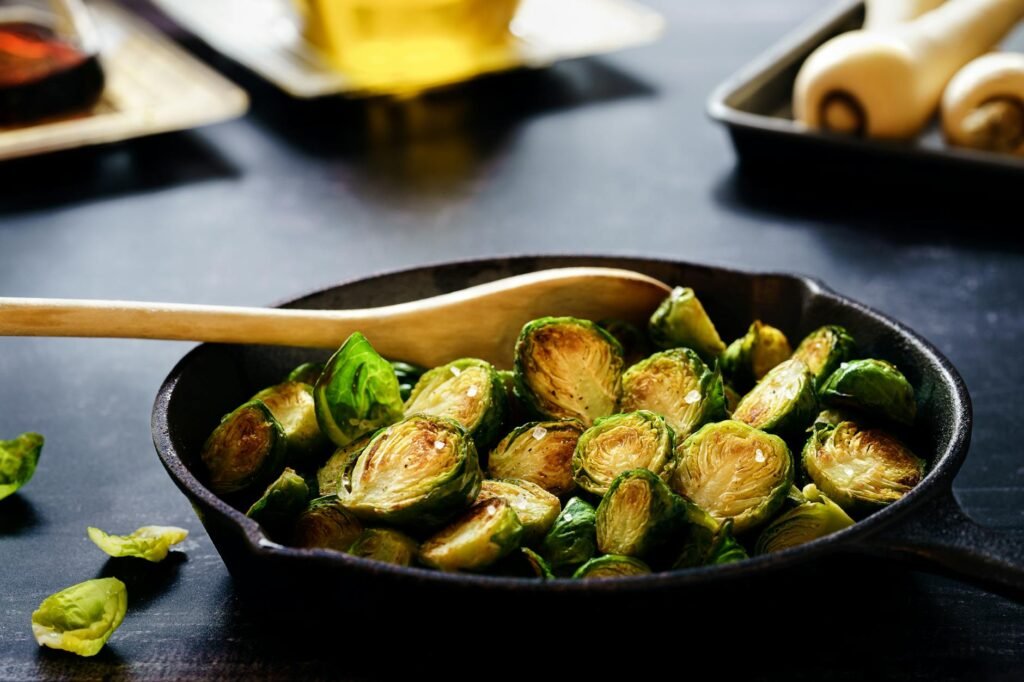
Where most home cooks lose crispness
- Using one overloaded pan because cleanup feels easier. In practice, that trades one dirty pan for a softer dinner. Strong4Life and Boston Medical Center both point toward single-layer roasting with space or no overlap. (Strong4Life)
- Washing and cutting vegetables, then tossing them straight into oil while they are still damp. Oil does not erase surface water. FDA says wash produce before preparing it, and Strong4Life says excess moisture causes steaming. (FDA)
- Cutting vegetables in random sizes. If some pieces are thin and others are bulky, the tray will never finish evenly. Mayo Clinic Press and Boston Medical Center both advise same-size pieces. (Mayo Clinic Press)
- Mixing dense and soft vegetables from minute one. Strong4Life explicitly recommends starting denser vegetables first and adding softer vegetables later. (Strong4Life)
- Trusting the oven dial without question. USDA notes that home ovens can run consistently high or low, and that offset can be factored into your settings once you verify it. (USDA)
- Pulling the tray when the vegetables are merely tender. Strong4Life’s better cue is golden brown and fork-tender, not softness alone. (Strong4Life)
When the first plan still is not enough
Sometimes your technique is basically sound and your goal still needs adjusting. Some vegetables are simply wetter than others. Frozen vegetables start with extra moisture. Some ovens are cooler than the display says. And some sheet pans are too small for the amount of food you are trying to roast. In those cases, you need a backup move, not more optimism. Strong4Life’s frozen-vegetable guidance and USDA’s oven-thermometer guidance are especially useful here. (Strong4Life)
- If the tray is crowded, move half the vegetables to a second pan instead of hoping extra minutes will dry everything out. (Strong4Life)
- If the vegetables are tender but pale, finish with a slightly hotter blast. Strong4Life specifically suggests increasing the oven temperature by 25°F for the last 5 minutes for crispier vegetables. (Strong4Life)
- If frozen vegetables keep coming out soft, preheat the oven and the baking sheet to 425 to 450°F before adding them. (Strong4Life)
- If you need a quick salvage move, spread the vegetables into a true single layer and finish briefly under the broiler, watching closely. A VA recipe uses an optional final broil until golden brown. (VA Nutrition)
- If your oven turns out to run 25°F cool or hot, adjust the dial based on that pattern instead of changing everything else in the recipe. USDA says a consistent offset can be factored into the setting. (USDA)
How to pressure-test your method before you waste another tray
- Roast the same vegetable on two pans at the same time: one crowded, one properly spaced. This isolates the crowding problem fast.
- Check your actual oven temperature with an oven thermometer placed in the center area of the oven. USDA recommends this as the way to verify whether the oven is heating to the desired temperature. (USDA)
- At the halfway point, look for dry contact points and visible browning, not just softness. Strong4Life’s target is golden brown plus fork-tender. (Strong4Life)
- If both are pale, your issue is likely related to temperature. If the pan that is crowded is both more moist and softer than the other, then your problem stems from poor spacing. If both pans were soft and moist, your issue would likely stem from previous moisture or a mixed vegetable that should have remained separated prior to cooking.
- Make one change at a time and write it down. The goal is to learn your oven and your favorite vegetables, not keep guessing from scratch every week.

Food safety still matters. Wash produce under running water before cutting or cooking, even if you plan to dry it afterward for better browning. FDA recommends washing produce before preparing it, and CDC advises rinsing fresh fruits and vegetables under running water. After dinner, refrigerate leftovers promptly; a VA roasted vegetable guide notes cooked roasted vegetables keep in the refrigerator for about 5 to 7 days. (FDA)
Bottom line
If your roasted vegetables keep coming out limp, simplify the diagnosis. Dry them well. Cut them evenly. Give them room. Roast sturdy vegetables around 425°F. Stagger dense and soft vegetables instead of forcing them onto one timeline. And if results still feel erratic, check your actual oven temperature. Once those variables are under control, crisp edges stop feeling like luck and start feeling repeatable. (Strong4Life)
FAQ
Why are my vegetables soggy even at 425°F?
Because 425°F cannot overcome surface water and pan crowding by itself. Strong4Life specifically says excess moisture makes vegetables steam instead of roast, and both Strong4Life and Boston Medical Center recommend a single layer with space or no overlap. (Strong4Life)
Should vegetables touch on the pan?
A little edge contact is not fatal, but overlap and crowding are. Once vegetables trap each other’s moisture, browning drops off quickly. Strong4Life says to leave space in between, and Boston Medical Center says to avoid overlapping. (Strong4Life)
Can I roast mixed vegetables together?
Yes, if they have similar density or you stagger them. Mayo Clinic Press advises pairing vegetables of similar consistencies, and Strong4Life recommends putting denser vegetables in first and adding softer vegetables later. (Mayo Clinic Press)
Can frozen vegetables get crisp in the oven?
They can brown well, but they need a different setup. Strong4Life recommends preheating the oven and baking sheet to 425 to 450°F because frozen vegetables contain more water than fresh vegetables. (Strong4Life)
Do I really need an oven thermometer?
If roasting results are inconsistent, it is one of the most useful tools you can buy. USDA says an oven thermometer can verify whether the oven is actually reaching the set temperature, and a consistent offset can then be corrected for in your oven setting. (USDA)
Can I rescue limp vegetables after roasting?
Sometimes. Re-spread them in a single layer and give them a short, hotter finish. For extra color, a brief broil can help, but watch closely. A VA roasted vegetable recipe includes an optional final broil until golden brown. (VA Nutrition)
Do I still need to wash vegetables if dryness matters so much?
Yes. FDA says to wash fruits and vegetables before preparing or cooking them. The trick is not skipping the wash; it is drying well afterward so the vegetables roast instead of steam. (FDA)
References
- USDA FSIS – Appliance Thermometers – https://www.fsis.usda.gov/food-safety/safe-food-handling-and-preparation/food-safety-basics/appliance-thermometers
- Strong4Life – Perfectly Roasted: A Guide to Flavorful Vegetables – https://www.strong4life.com/en/feeding-and-nutrition/meal-planning-and-prep/perfectly-roasted-a-guide-to-flavorful-vegetables
- Boston Medical Center – Roasted Vegetables – https://www.bmc.org/recipes/roasted-vegetables
- Mayo Clinic Press – How to roast any vegetable – https://mcpress.mayoclinic.org/nutrition-fitness/how-to-roast-any-vegetable/
- FDA – Selecting and Serving Produce Safely – https://www.fda.gov/food/buy-store-serve-safe-food/selecting-and-serving-produce-safely
- CDC – Food Safety Basics – https://www.cdc.gov/food-safety/about/index.html
- VA Nutrition – Roasted Vegetables PDF – https://nutrition.va.gov/NUTRITION/docs/Recipes/SideDishes/Roasted-VegetablesOCT2021.pdf